
NEWS
-
 Published on 20/02/2024
Video - Flax from past to present
What do mummy strips and the hull of a boat have in common? Both contain flax fibres! Much appreciated by the Egyptians, this plant material with its many qualities is now being studied with a view to (...)Read more -
 Published on 13/02/2024
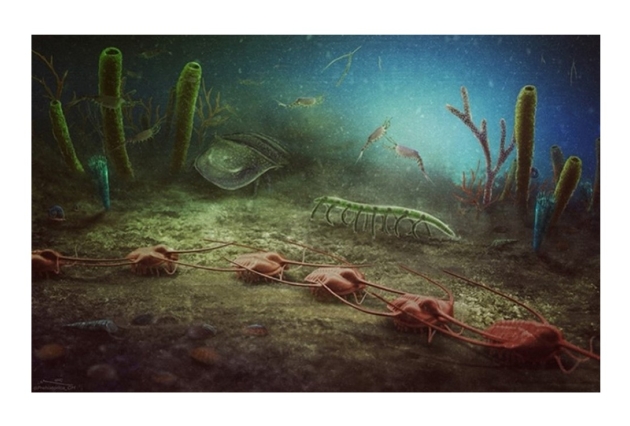
New exceptionally preserved fossils discovered in the south of France characterized using (...)
A new fossil bed has been uncovered in the French department of Hérault through the perseverance of two ardent amateur palaeontologists. The couple’s discoveries were studied by scientists from teams (...)Read more -
 Published on 31/01/2024
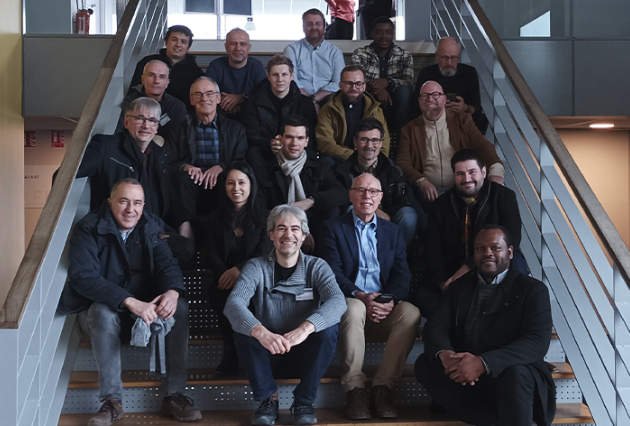
Photon and Neutron Communities Cybersecurity Workshop
On January 22 and 23, 2024, the first face-to-face Cybersecurity Workshop was held at SOLEIL, bringing together Information Systems Security Managers and IT Infrastructure Managers from the main (...)Read more -
 Published on 16/01/2024
Best wishes for 2024!
SOLEIL Synchrotron staff wishes you a very happy new year!Read more -
 Published on 08/01/2024
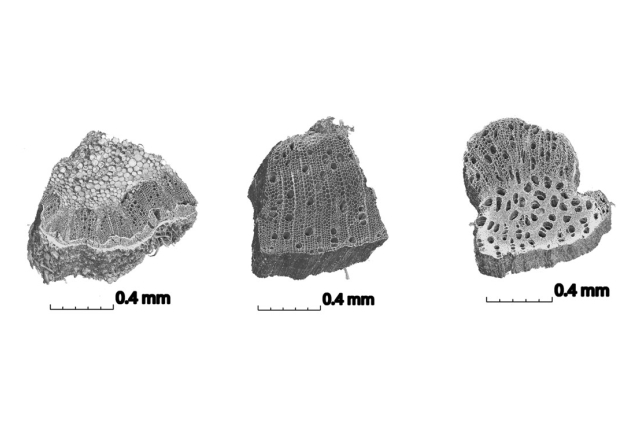
Remediation of copper-laden water using hemp: coupling two synchrotron analysis techniques (...)
There is growing interest in the use of lignocellulosic materials, such as hemp, as adsorbents to recover copper from industrial waters. While hemp is known to be chemically efficient for such an (...)Read more -
 Published on 22/12/2023
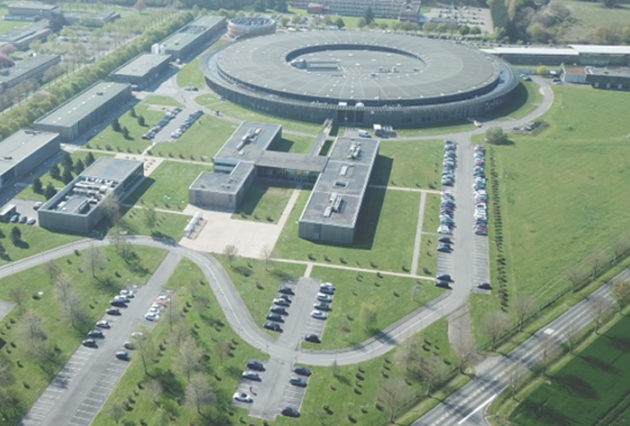
Appointment of the future Director General of the Synchrotron SOLEIL
The SOLEIL Council has appointed Jean Susini as Director General of the Synchrotron SOLEIL with effect from 1 September 2024.Read more -
 Published on 22/12/2023
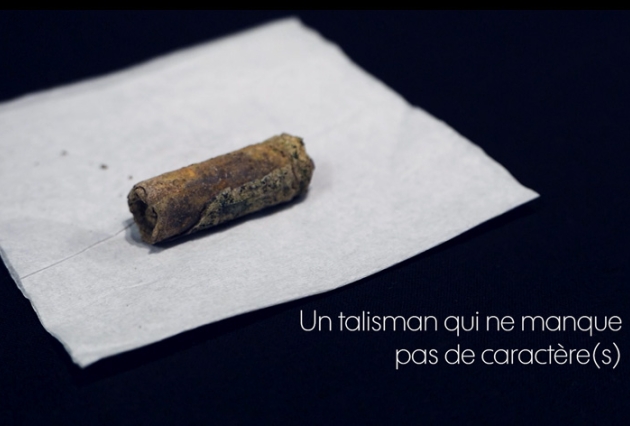
Video - A talisman with plenty of character(s)
3.5 cm long, 1.5 cm in diameter... This small talisman, which may soon join the collections of the Musée des Écritures d'Ampus in the Haut-Var county of France, is very mysterious, and above all, very (...)Read more -
 Published on 11/12/2023
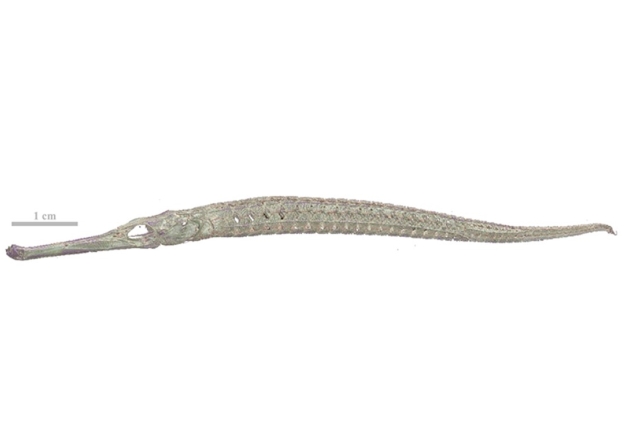
Unraveling the otolith through X-ray nanofluorescence at the NANOSCOPIUM beamline
Otoliths are mineral structures found in the inner ear of vertebrates. In teleost* fish, they continuously form throughout the animal's life, preserving a chronological record of the chemical and (...)Read more -
 Published on 05/12/2023
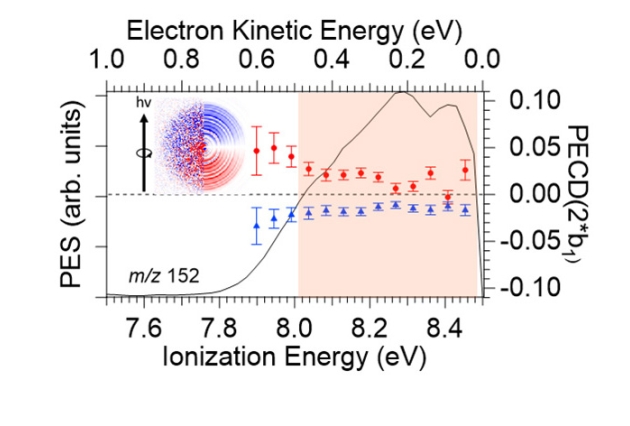
Induced chirality onto an achiral molecule also exists in Photoelectron Circular Dichroism (...)
Circular Dichroism measurements have already demonstrated that an achiral (1) molecule can acquire a chiral (1) spectroscopic signature when interacting with a chiral environment. A new study (...)Read more -
 Published on 23/11/2023
Haüy-Lacroix Prize 2023 awarded to Rémy Pierru, by the Société Française de Minéralogie et (...)
Rémy Pierru's thesis, entitled " Mantle melting at high pressure and high temperature: application to early Earth dynamics”, set out to reproduce experimentally the conditions under which the Earth’s (...)Read more -
 Published on 07/11/2023
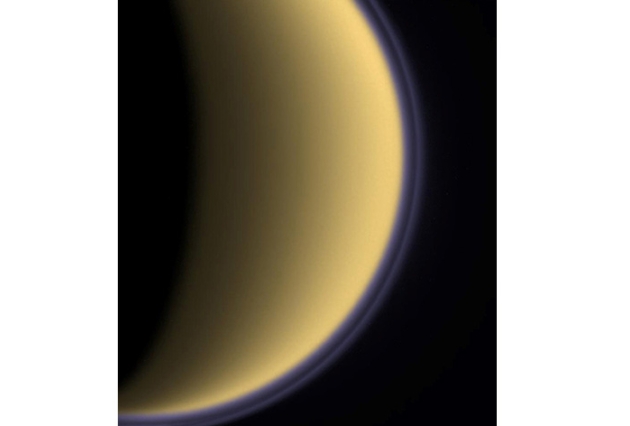
Titan's atmosphere - methane signatures in the infrared range studied on AILES beamline
Methane is a particularly interesting molecule for studying (exo-) planetary atmospheres, especially that of Saturn's moon Titan, which has a thick atmosphere. Detailed analysis of the radiation (...)Read more -
 Published on 06/11/2023
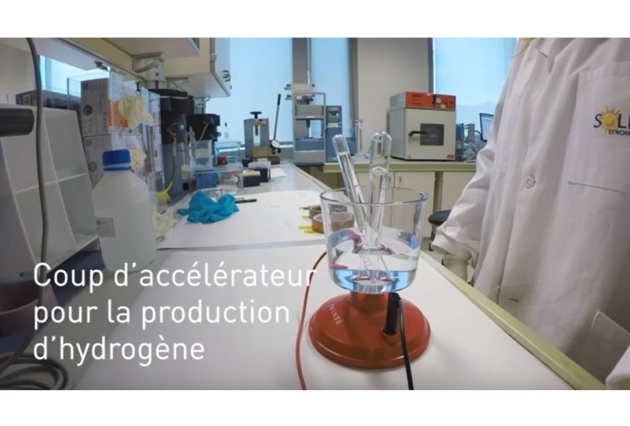
Video - Stepping on the accelerator for hydrogen production
Water and electricity to produce hydrogen: this is the electrolysis of water, a reaction that many high school students have performed during chemistry practicals. A seemingly simple reaction, but (...)Read more