
NEWS
-
 Published on 21/01/2014
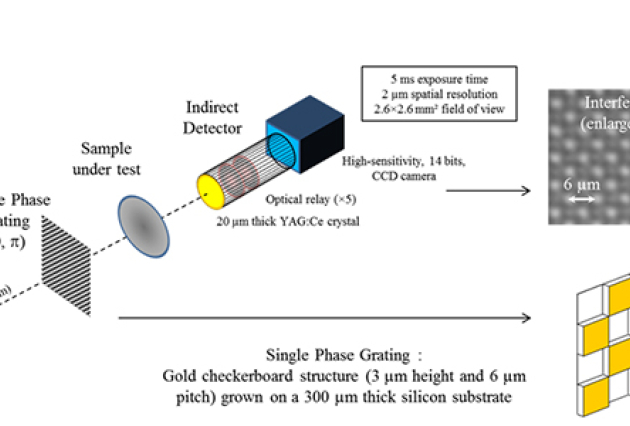
X-ray Phase Imaging
X-ray radiography based on absorption contrast is one of the efficient techniques allowing probing matter in depth. However, its analysis capabilities are strongly limited, when the elementary parts (...)Read more -
 Published on 20/01/2014
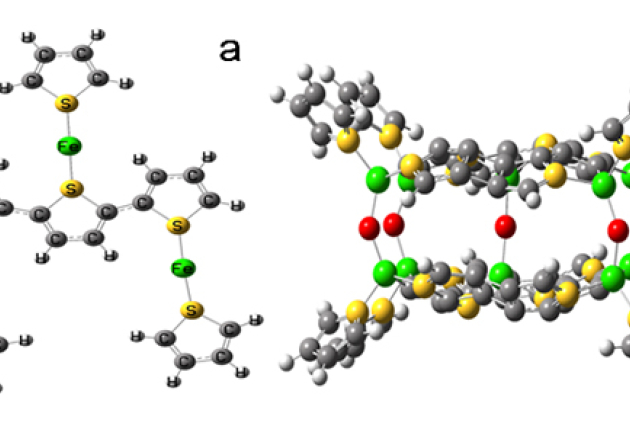
Lithium ion batteries : Polythiophene coordination complexes, a promising material
Current lithium ion battery (LIB) technologies are all based on inorganic electrodes, though organic materials have been hyped as electrodes for years. Disadvantages such as low specific capacity and (...)Read more -
 Published on 23/12/2013
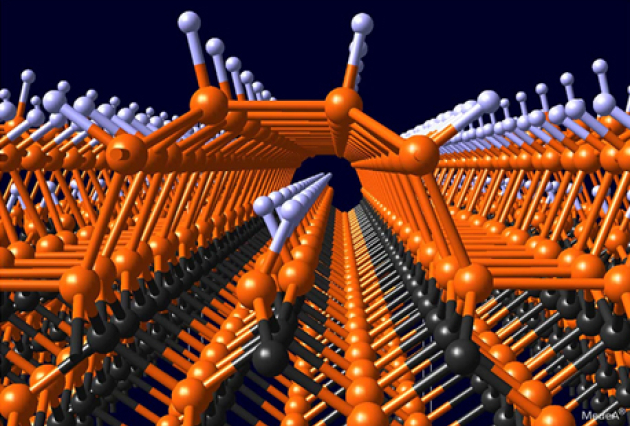
Hydrogen-induced nanotunnel opening below the surface of a semiconductor, Silicon Carbide
Nanostructuring a surface is a key and mandatory engineering step toward advances in nanotechnology. A team of french and italian scientists and of a franco-american company has just shown that (...)Read more -
 Published on 19/12/2013
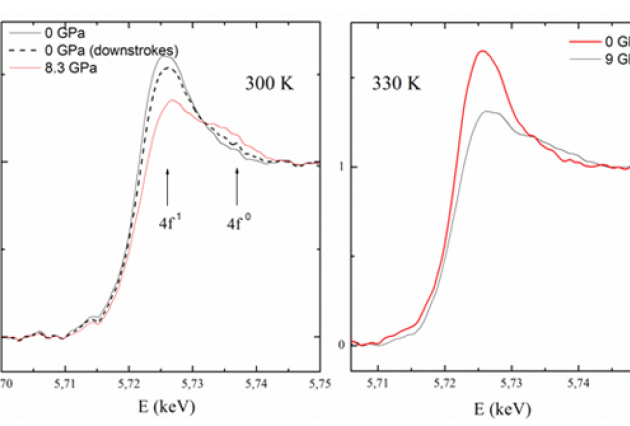
Phase diagram of cerium-based bulk metallic glasses at high pressure and temperature
Metallic glasses are currently of growing interest worldwide due to their remarkable physicochemical properties with regard to their crystalline counterparts. Among them, the cerium based metallic (...)Read more -
Published on 17/12/2013
New edition of the ‘Infrared and NMR Spectroscopies' course for secondary teachers
Following the success of the infrared (IR) and nuclear magnetic resonance (NMR) course organised during the 2012-2013 school year, a new edition of this course will take place on 8, 22, and 29 January (...)Read more -
 Published on 06/12/2013
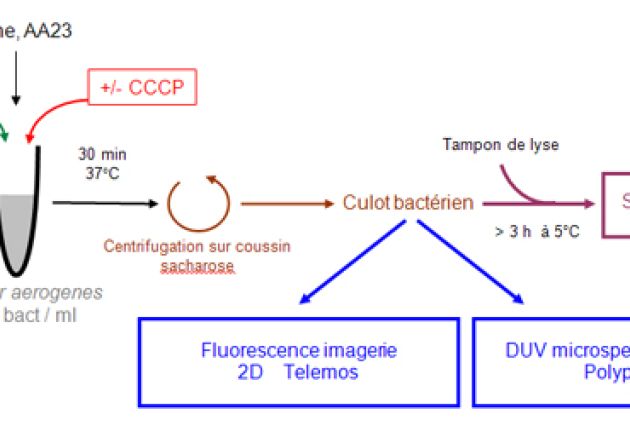
Tracking the accumulation of antibiotic molecules in resistant bacteria
The Joint Research Unit UMR-MD1, Aix-Marseille University, has been working with the DISCO beamline for several years to develop a non-invasive, non-perturbing method of determining the concentration (...)Read more -
 Published on 06/12/2013
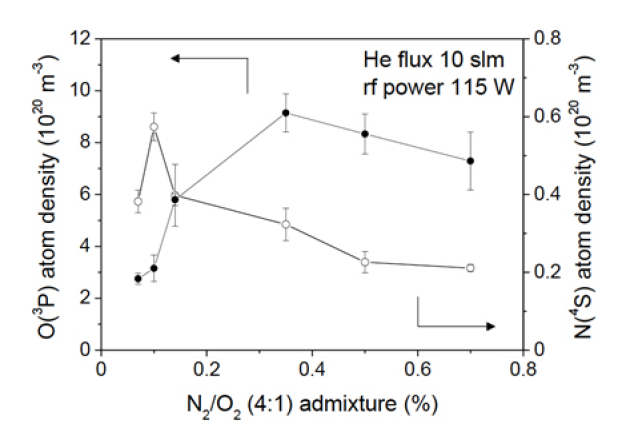
Cold plasma-generated reactive atoms for biomedicine
Cold atmospheric pressure plasmas are emerging as precious tools for new applications with potential to revolutionise science, technology and health care. In order to control and tailor the presence (...)Read more -
 Published on 29/11/2013
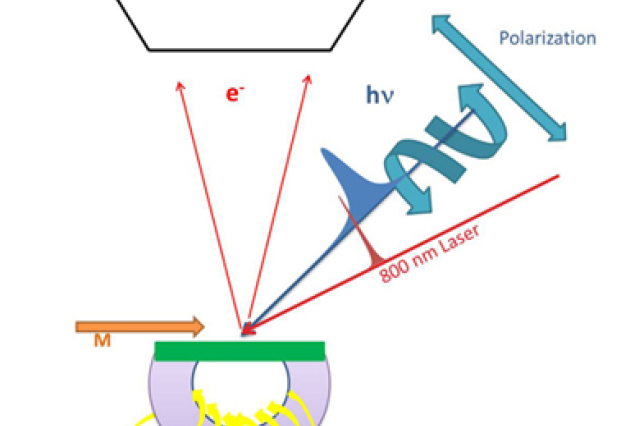
Laser induced fast demagnetization in epitaxial Gd layers studied with photoelectron (...)
The fast demagnetization process in magnetic films is a phenomenon that has been attracting increasing research interest for its prospective applications in data storage. Studies are most often (...)Read more -
 Published on 27/11/2013
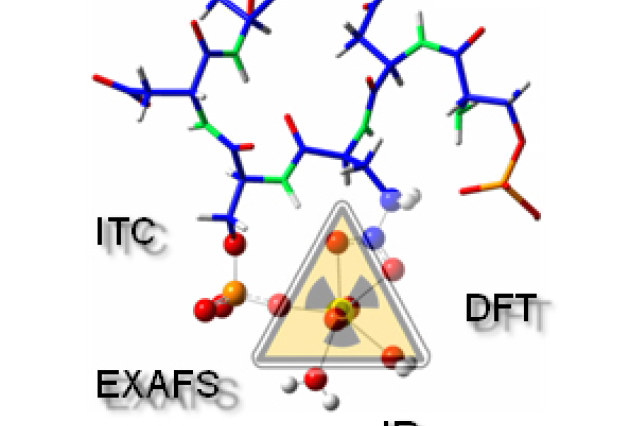
Which protein is responsible for uranium accumulation in the skeleton?
Radiochemists from CNRS/Université Paris-Sud Orsay (IPNO) and CNRS/ Université de Nice-Sophia Antipolis (ICN) and biologists from the life science CEA division (DSV) collaborated with the MARS (...)Read more -
 Published on 27/11/2013
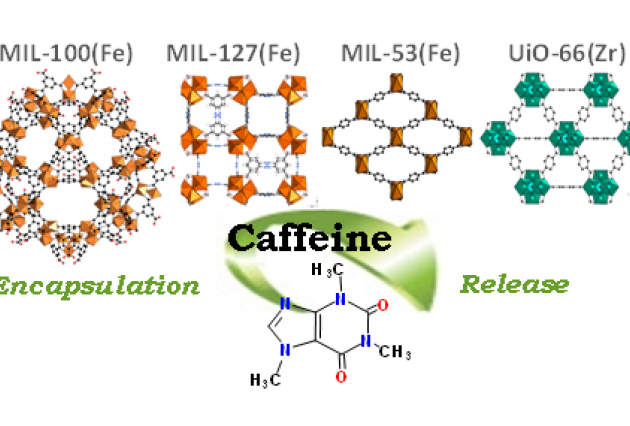
Caffeine in cosmetics – optimizing its release into the body by means of "MOFs”
Hybrid metal-organic frameworks or MOFs are very promising candidates for applications in strategic areas such as catalysis, separation or, more recently, biomedicine. A group from Institut Lavoisier (...)Read more -
 Published on 18/11/2013
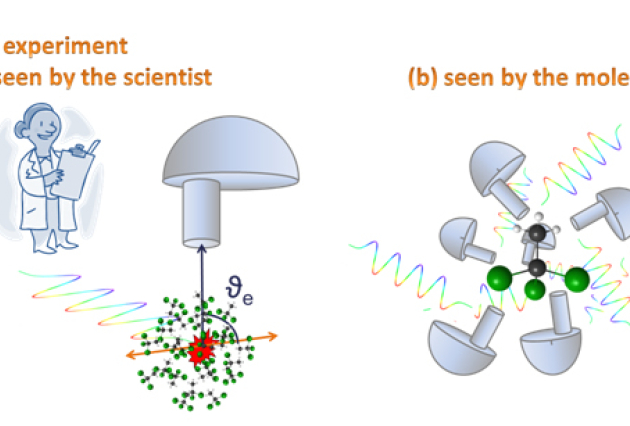
Photoemission spectroscopy: what do the angular distributions of electrons tell us
In a recent paper published in Physical Review an international group of scientists demonstrated that laboratory frame electron angular distributions can be used as a tool to probe the chemical (...)Read more -
 Published on 18/11/2013
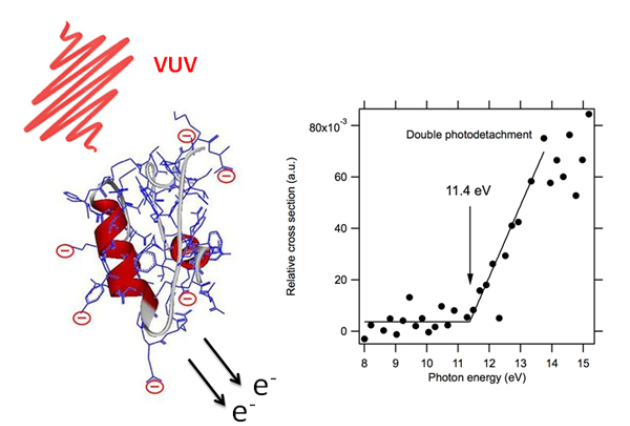
Proteins easy to peel... of electrons!
Removing electrons from a material requires energy that can be provided in various forms. When using light as the energy source, it is by the photoelectric effect that electrons are ejected from (...)Read more