
NEWS
-
 Published on 13/04/2014
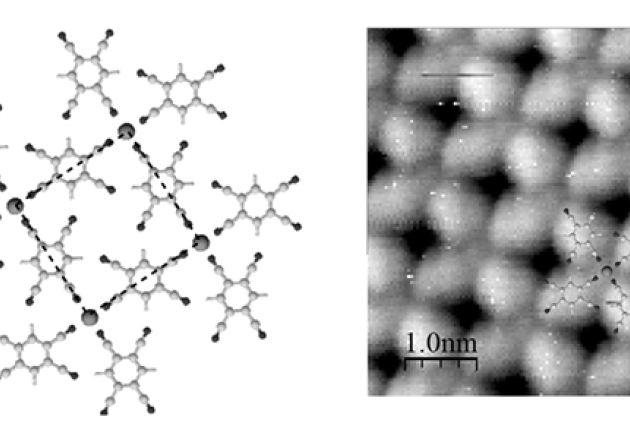
2D magnetic coupling between Mn centers in a metal-organic network
Organic molecules can be intercalated by magnetic atoms on a surface producing two-dimensional metal-organic networks. Whether such systems can display magnetism was the subject of a study performed (...)Read more -
 Published on 09/04/2014
Intensive industrial data collection using sample changer by VERNALIS, on PROXIMA 1: 110 (...)
Vernalis is a pharmaceutical company with a strong focus on Structure Based Drug Design (SBDD). Protein Crystallography plays an important role in our research.Read more -
 Published on 04/04/2014
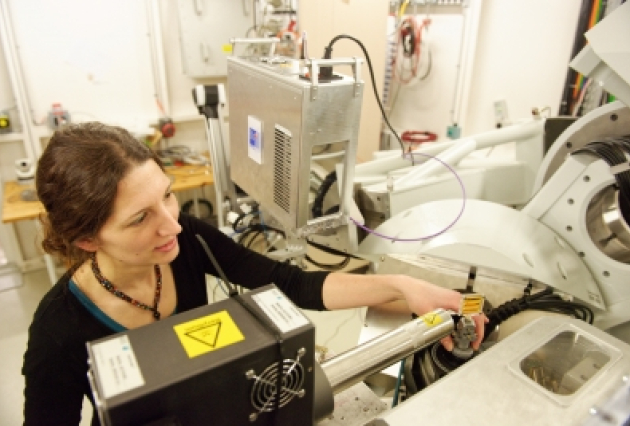
A Single Molecule Magnet comfortable on surfaces
An international team from Italy and France studied a new Single Molecule Magnet with the x-ray beam of DEIMOS beamline, revealing that this molecule is remarkably comfortable on a surface, with its (...)Read more -
 Published on 01/04/2014
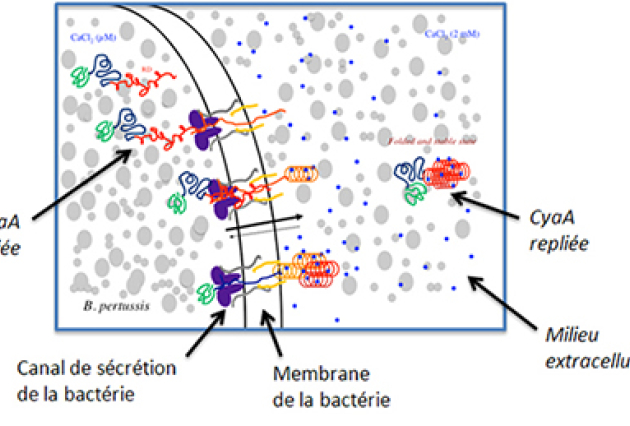
How crowds support biological processes
Biomolecules (proteins, DNA, sugars, etc.) are often studied in purified solutions, where they have as much space to stretch out in as they might want. But in an organism, where thousands of molecules (...)Read more -
 Published on 21/03/2014
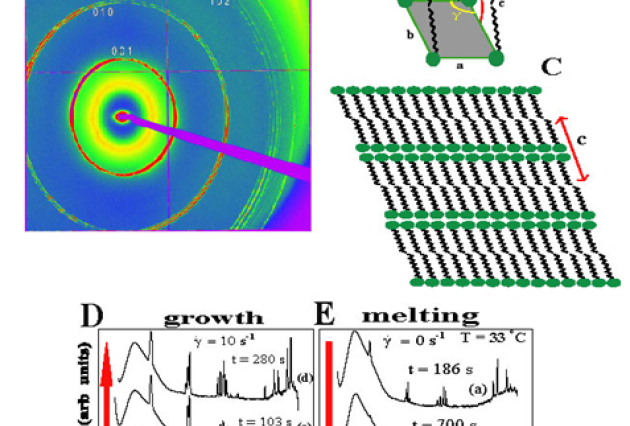
The Rheo-SAXS system on the SWING beamline reveals a new shear reversible crystallization (...)
In the manufacturing processes for many surfactant-based products, mechanical mixing is an important control parameter because it homogenizes multi-component systems and enhances their crystallization (...)Read more -
 Published on 18/02/2014
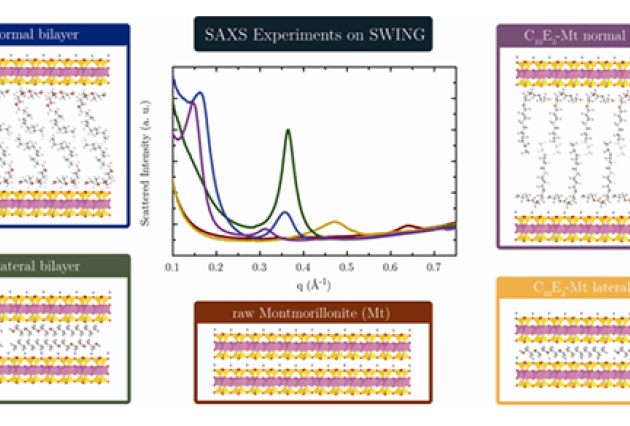
Self-organization of a non-ionic surfactant onto a natural layered material
The aggregation of amphiphilic molecules and their organization on various surfaces are common phenomena in many applications such as surface treatments, cleaners and nano-composite materials. For (...)Read more -
 Published on 14/02/2014
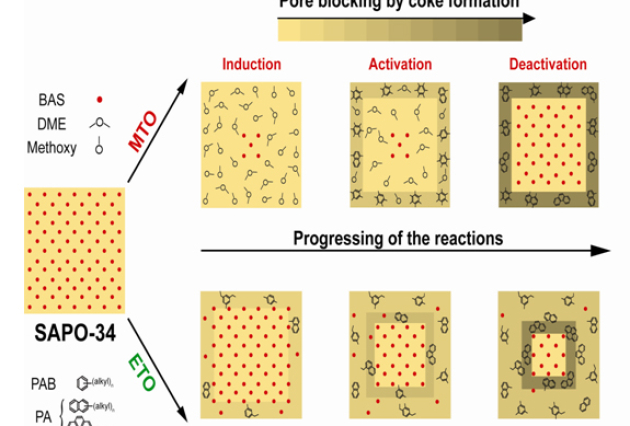
Energy and catalysis – Conversion of methanol to hydrocarbons, the catalyst examined under (...)
The conversion of methanol-to-hydrocarbons is an attractive catalytic technology to obtain gasoline or olefins from alternative feedstocks, such as natural gas and biomass. This process is catalyzed (...)Read more -
 Published on 14/02/2014
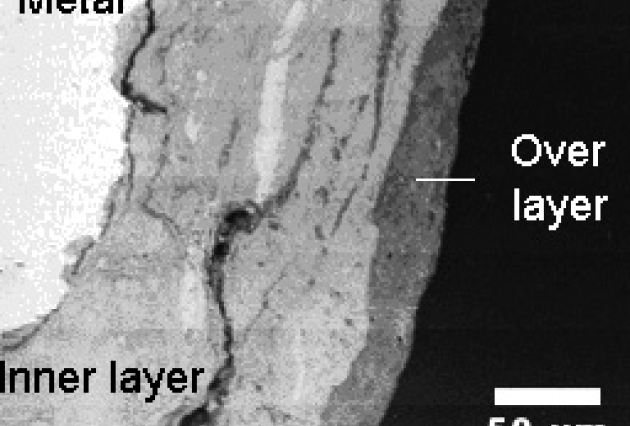
In situ study of the mechanisms of atmospheric corrosion of iron
It is crucial to be able to study corrosion and predict the behavior of metals over long periods, especially in the specific context of managing the conservation of cultural heritage materials. The (...)Read more -
 Published on 14/02/2014
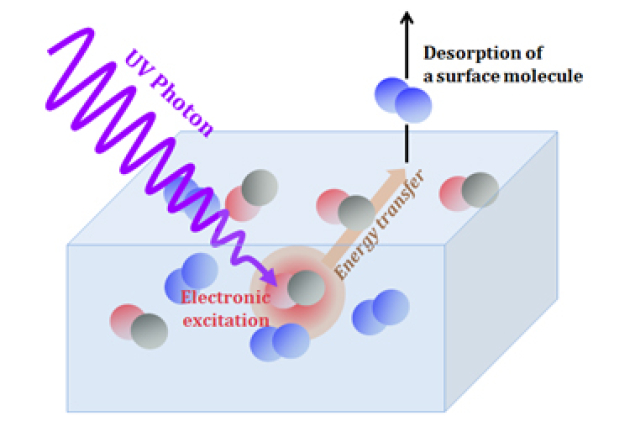
Why do telescopes detect gaz where there should only be dust and ice?
In the very cold regions of the interstellar medium (10-30 K), desorption induced by low-energy (7-14 eV) UV photons can explain the abundances of molecules in the gas phase, at temperatures well (...)Read more -
 Published on 11/02/2014
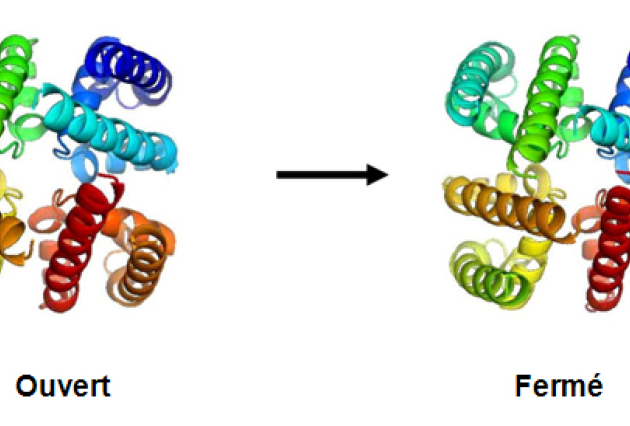
Cell signaling - Structure and Function of the C-terminal Domain of a Voltage-Gated Sodium (...)
Voltage-gated sodium channels are complex proteins present in the membranes of all higher organisms that are responsible for the transport of sodium ions into and out of cells. In humans, sodium (...)Read more -
 Published on 11/02/2014
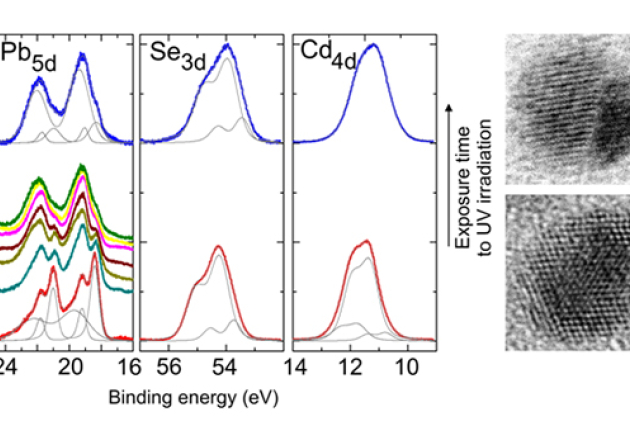
Deformation of nanocrystals under irradiation
Unlike soft condensed matter, crystalline solids are not particularly subject to phase change effects under illumination. With the emergence of nanometric size solids, this resistance to radiation has (...)Read more -
 Published on 07/02/2014
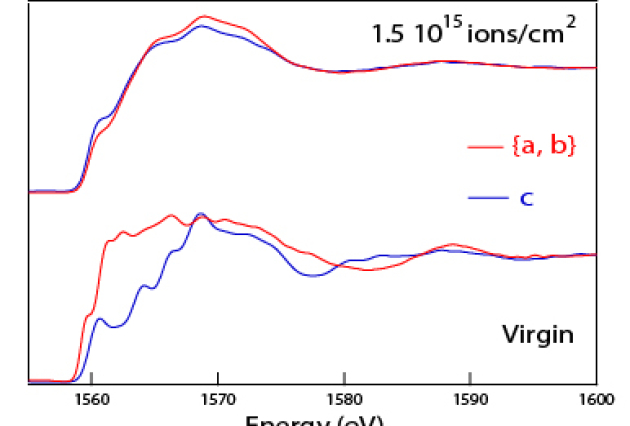
Materials in extreme environments - Characterization of ion irradiation damages in (...)
“MAX phases” are materials that combine the properties of metals and ceramics: refractoriness, damage tolerance, resistance to thermal shock, oxidation and corrosion, and conservation of mechanical (...)Read more