
NEWS
-
 Published on 30/05/2016
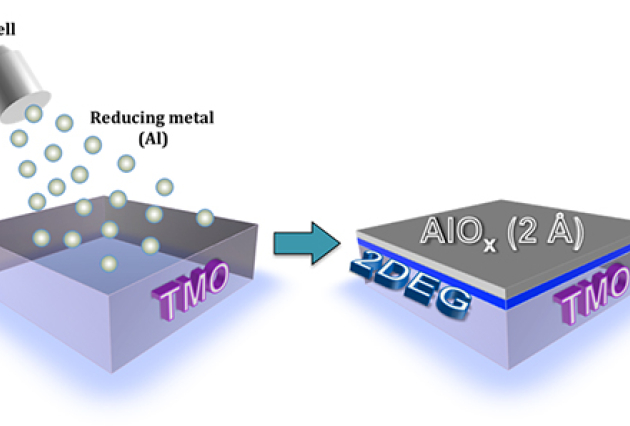
Universal fabrication of two-dimensional electron gases in functional oxides for future (...)
Two-dimensional electron gases (2DEGs) in transition-metal oxides show remarkable properties that make them promising candidates for future applications in electronics. However, their fabrication and (...)Read more -
 Published on 26/05/2016
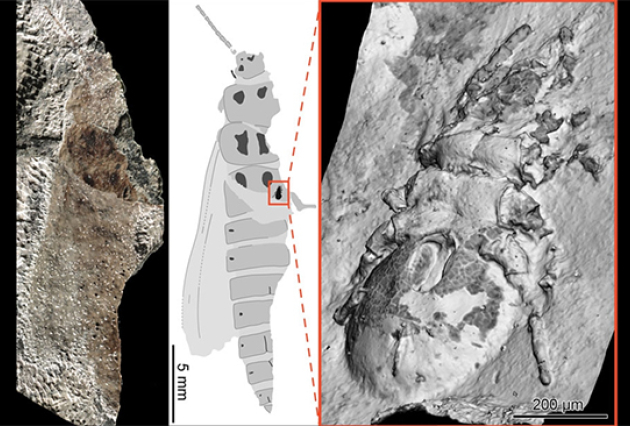
Phase contrast tomography at PSICHÉ reveals a very ancient symbiosis
More than 320 million years ago, an insect of an extinct group of grasshopper and carrying a minute mite on its back was rapidly buried, and then fossilised. Recently, both fossil animals were (...)Read more -
 Published on 05/05/2016
SOLEIL Highlights 2015
“Light”, a particularly relevant theme for a synchrotron radiation facility, was chosen by UNESCO for the International Year 2015. What can be drawn from this year in SOLEIL? Browse the electronic (...)Read more -
 Published on 08/04/2016
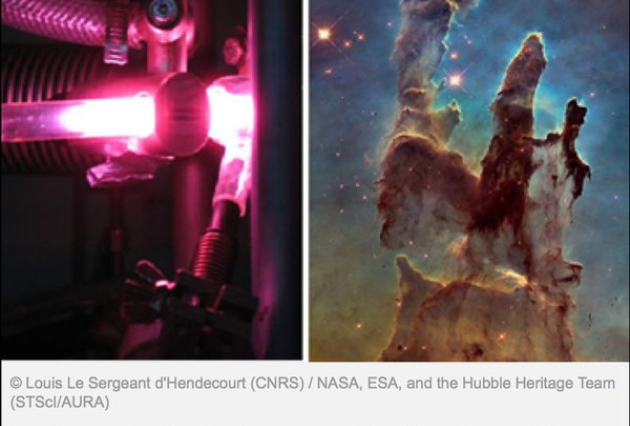
Origin of life: an artificial comet holds the missing piece
Researchers have for the first time shown that ribose, a sugar that is one of the building blocks of genetic material in living organisms, may have formed in cometary ices.Read more -
 Published on 08/04/2016
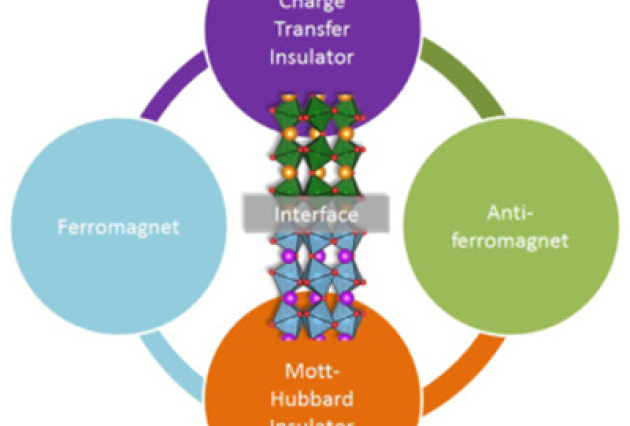
Superconductivity and nickelates
Cuprates (copper oxides) are currently used as highest temperature (-135° C) superconductors. Scientists are trying to find new candidates for which this temperature would be even higher. This (...)Read more -
 Published on 08/04/2016
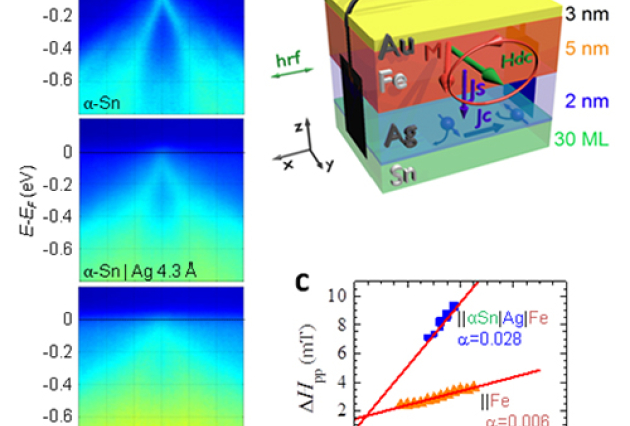
Spintronics harnesses the exotic electrons of topological insulators
Researchers from Unité Mixte de Physique CNRS Thales and CEA INAC SP2M, in partnership with the CASSIOPÉE beamline, demonstrate the potential of recently discovered topological insulator α-Sn for room (...)Read more -
 Published on 04/04/2016
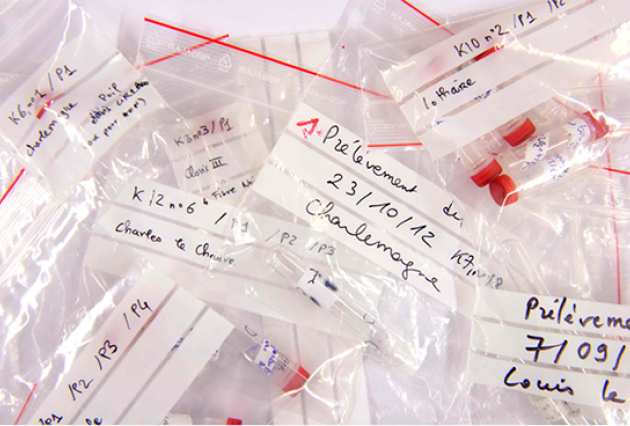
From Pépin le Bref and Charlemagne to Gustave Flaubert: Hair, witness to our History and (...)
In March 2016, Doctor Philippe Charlier, Sophie Jacqueline and Julie Arteta, from the Medical and Forensic Anthropology group of Versailles Saint Quentin University, came to DiffAbs beamline to study (...)Read more -
 Published on 16/03/2016
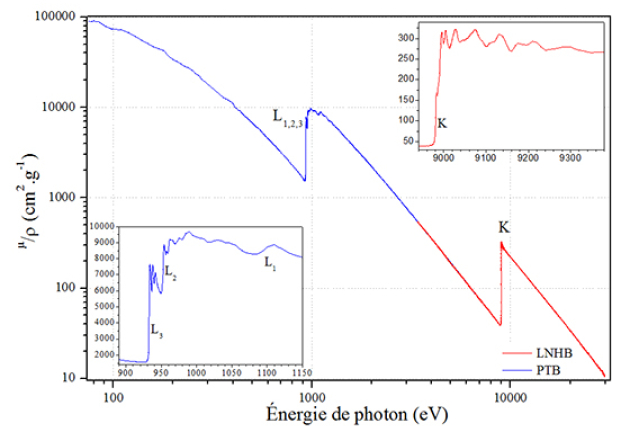
Baseline data, fundamental for X-ray studies, widely revisited
Analytical techniques using X-rays (X-ray fluorescence spectroscopy, X-ray absorption, optical characterization, etc.) require knowledge of fundamental atomic data, and in particular the mass (...)Read more -
 Published on 10/03/2016
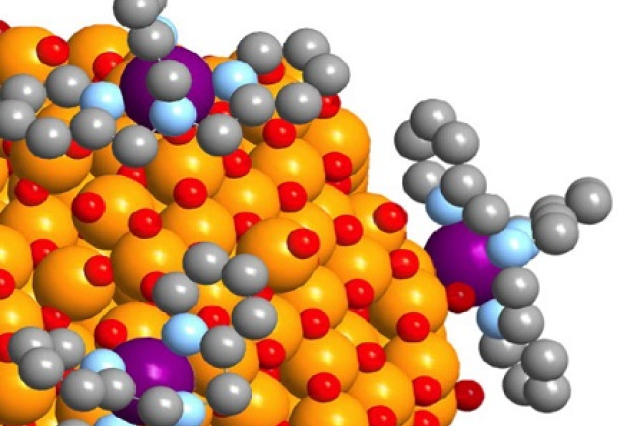
New magnetic iron oxide nanoparticles for imaging, vectorization and data storage
Nano-magnets are of particular interest for researchers in the field of nanomedicine since they are easily tunable through a magnetic field. Iron oxide, which is not expensive and easy to synthesize (...)Read more -
 Published on 24/02/2016
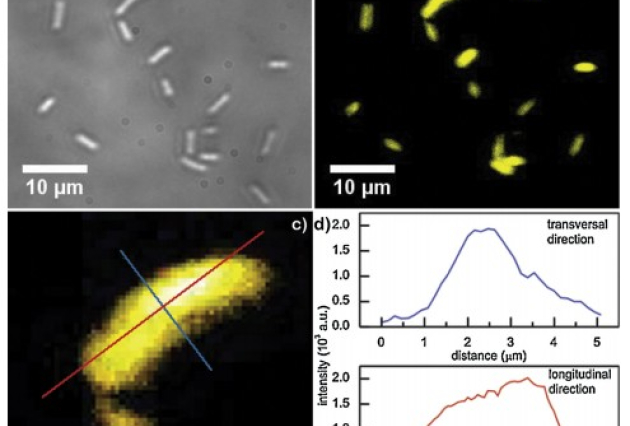
Tryptophan and gold nanoparticles: A winning duo for deep ultraviolet imaging of microbial (...)
Researchers from the University of Belgrade successfully demonstrated the utility of tryptophan-functionalized gold nanoparticles as fluorescent probes for imaging of microbial cells. In the study (...)Read more -
 Published on 24/02/2016
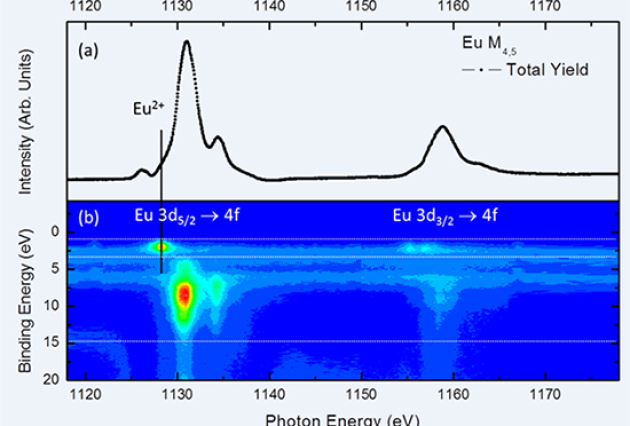
Mixed-valence Eu 2+/Eu 3+ europium salt : Coupling photoemission techniques for a first (...)
After showing the coexistence of Eu 2+/Eu 3+ ions in hydrated EuCl3 salt, which was then proved to be EuCl 2,85 salt (see 2013 study published in J. Phys Chem. C) a new advance has been made on the (...)Read more -
 Published on 24/02/2016
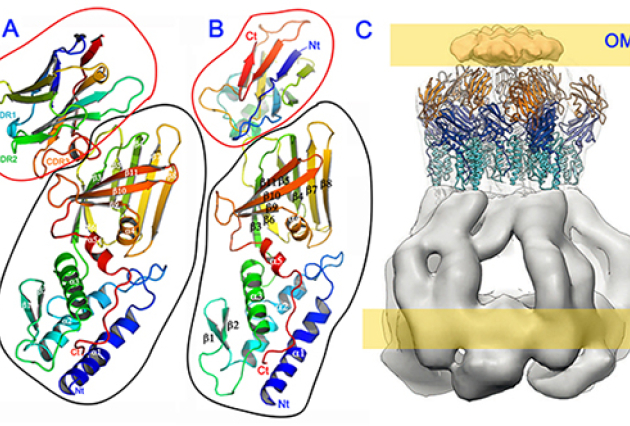
A nano-crossbow in pathogenic bacteria …
Crystal structure of part of the type VI secretion system solved on PROXIMA-1 Among the multiple systems used by bacteria to survive and multiply, the T6SS- type VI secretion system is one of the main (...)Read more