
Cancer: Not all mutations in the CREBBP Tumor Suppressor gene have the same consequences
Researchers from Université Paris Cité, the French National Centre for Scientific Research (CNRS), Institut Pasteur, and MD Anderson Cancer Center (Texas, USA) report that mutations in the CREBBP gene, frequently observed in many cancers, do not all have the same impact on enzyme function. Structural data collected at SOLEIL from the PROXIMA-1 and PROXIMA-2 beamlines were instrumental in explaining these differences.
This discovery provides new insights into the molecular mechanisms underlying carcinogenesis and could contribute to the development of more personalized treatments. It is published in Proceedings of the National Academy of Sciences of the USA (PNAS).
CREBBP is an enzyme that plays an essential role in regulating gene expression. By modifying histones, the proteins around which DNA is wrapped, it controls the activation or repression of numerous genes involved in cell proliferation and differentiation. Alterations in this enzyme, which is considered a tumor suppressor, are found in many cancers, but their precise functional consequences have remained largely unknown.
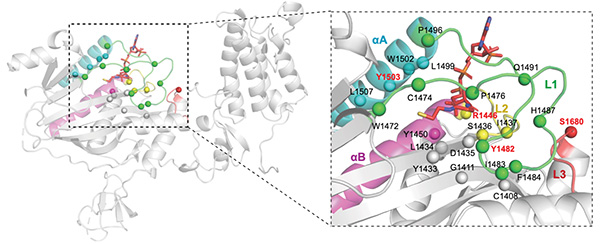
By combining biochemistry, structural biology, cellular studies, and genomic analyses, the researchers investigated the main CREBBP mutations identified in patients. They showed that some mutations completely abolish enzymatic activity, whereas the most frequent mutation, R1446, allows the enzyme to retain residual activity by selectively disrupting the binding of its cofactor, acetyl-CoA.
Using data collected at beamlines PROXIMA-1 and PROXIMA-2, the three-dimensional structures of the mutant forms of CREBBP explain these differences. For example, while some mutations directly disrupt the enzyme's catalytic center, the R1446 mutation primarily alters cofactor binding without completely preventing the enzymatic reaction. This partial activity could explain why this mutation is the most frequently observed in cancer: a completely inactive CREBBP enzyme might be disadvantageous for cancer cells, whereas partially preserved activity could provide a more favorable balance between gene dysregulation and the maintenance of cellular functions required for tumor survival.
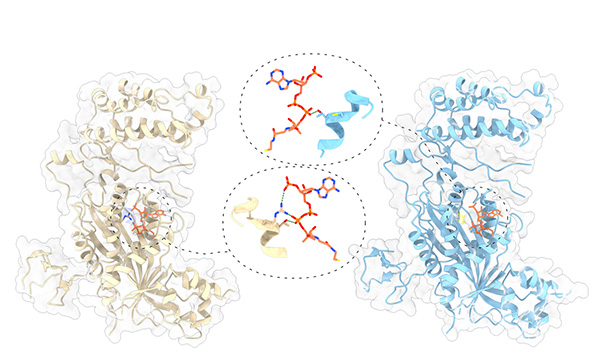
Beyond advancing our fundamental understanding of CREBBP function, these findings have clinical implications. Several therapeutic strategies that exploit mutant forms of CREBBP are currently under development. This study suggests that their effectiveness may depend on the specific CREBBP mutation present in each patient, opening the way to personalized medicine based on the functional consequences of mutations rather than simply on their presence.
By integrating structural, biochemical, and cellular analyses, this study provides a functional map of the major CREBBP mutations and proposes a new approach to classifying them—not solely according to their position in the gene, but according to their effects on enzyme function.