Workshop Frontiers in Science at SR facilities

Nous avons le plaisir d’annoncer le premier colloque « Frontiers in Science at SR facilities », qui se tiendra les 12 et 13 octobre 2026 à SOLEIL.
Son périmètre scientifique est volontairement large et inclut les défis scientifiques de SOLEIL définis dans l’Avant-Projet Sommaire pour l'Upgrade de SOLEIL et discuté avec les sections scientifiques de SOLEIL.
L’atelier vise à aborder des thématiques scientifiques importantes ainsi que des enjeux scientifiques et sociétaux majeurs pouvant bénéficier de l’évolution future des installations synchrotrons, en réunissant la communauté afin d’échanger des idées et de partager des avancées.
Le programme sera structuré autour de conférences invitées données par des experts internationaux de premier plan. Ces interventions aborderont des questions scientifiques fondamentales ainsi que les nouvelles capacités en instrumentation, techniques expérimentales, analyses de données et évolution des infrastructures.
L’accent sera mis sur les techniques d’imagerie et fondées sur la cohérence. La complémentarité avec d’autres grandes infrastructures (telles que les TEM, lasers ou FEL, etc.) constituera également un axe important de l’atelier.
Cliquer ici pour voir le programme détaillé.
Télécharger le programme prévisionnel.
Le programme comprend 9 conférences plénières de 45 minutes + 15 minutes de discussion chacune, ainsi que des visites optionnelles des installations.
Liste des invités pléniers confirmés
Ariane Briegel from Pasteur Institute (France) leads the Integrative Structural Cell Biology Lab. The unit is interested in understanding how microbes interact with their environment on a structural level, addressing questions such as how cells can actively seek out their preferred environmental niches, how they can evade toxins and predators, how they interact with phages, each other and with host tissue, and how they can adapt to thrive in fluctuating environments. To gain insight into the structure and function of the molecular complexes underlying these behaviors, we use cryo-electron tomography to directly visualize microbes in their native state at resolutions capable of examining individual proteins. Plenary talk title : Pushing the boundaries of cryo-microscopy to gain insight into host-microbe interactions
Henry N. Chapman from DESY (Germany) is the director of the Centre for Free Electron Laser Science and leads the Coherent Imaging Group. He has made numerous contributions to the fields of X-ray coherent diffraction imaging and phase retrieval, time-resolved coherent X-ray imaging and instrumentation using intense X-ray pulses. He is a pioneer of the diffraction before destruction technique that allows to analyze biological samples.
Veerle Cnudde from Univ. Utrecht (Netherlands) & Ghent Univ. (Belgium) leads the Pore-scale Processes in Geomaterials Research Group. She specializes in non-destructive imaging of geomaterials and has a strong expertise in real-time imaging of processes in the pore space. She also focuses on stone conservation and deterioration related to Cultural and Natural Heritage. Plenary talk title : From Pores to Processes: How X-ray Imaging Continues to Transform Geoscience.
Stefan Eisebitt from the Technische Universität Berlin (Germany) is the director of the Max-Born-Institute for Nonlinear Optics and Short Pulse Spectroscopy. His group investigates the switching behavior of magnetic nanostructures, e.g. for applications in novel magnetic data storage media. His research interest is in ultrafast manipulation of magnetization and novel imaging and scattering methods with coherent radiation and short wavelength. Plenary talk title : Dynamical Processes on the Nanometer Scale
Alexander Hexemer from Advanced Light Source from Berkeley Lab (USA) leads the Photon Science Computing Group (PSC), which provides computational support and expertise for ALS beamlines and users. PSC develops software tools, data analysis methods, and machine-learning approaches to help scientists work effectively with synchrotron data. His team collaborates with researchers on projects ranging from basic data processing assistance to developing new computational techniques for challenging experiments. PSC works closely with NERSC (National Energy Research Scientific Computing Center) to create efficient data storage and management solutions at the ALS. Plenary talk title : Toward the Autonomous Light Source: Preparing Synchrotron Science for the Age of Agentic AI
Christine Joblin from the French National Centre for Scientific Research (France). She is a Research Director and an astrochemist who uses spectroscopy to study photodissociation and the polycyclic aromatic hydrocarbons in cosmic dust. Beyond her experimental and observational work, she also contributed to the first clear finding of buckminsterfullerene in a meteorite, a ureilite that exploded over the Nubian Desert in late 2008. Plenary talk title : Elucidating Molecular Complexity in Space: The Role of Synchrotron and Other Large-Scale Facilities
Andreas Schaefer from the Francis Crick Institute (UK) leads the Sensory Circuits and neurotechnology Lab. The human brain is exceptionally complex. It’s packed with billions of nerve cells that are constantly communicating, sending and receiving electrical signals that result in thoughts, actions and memories. Figuring out how such complex behaviours arise from the combined actions of individual nerve cells is the greatest challenge in neuroscience. To make things simpler, his group is studying one specific part of the brain known as the olfactory bulb, which is responsible for smelling. Nerve cells in the olfactory bulb receive signals from the nose, triggered by smelly chemicals, and process this information to create a response – for example, moving towards delicious-smelling food, moving away from unpleasant rotting odours, or being attracted to the scent of a potential mate. Plenary talk title : X-ray tomography for Circuit Neuroscience – Towards X-ray Connectomics
Odile Stéphan from Univ. Paris-Saclay (France) has managed the electron microscopy team at LPS - Orsay Solid State Physics Laboratory (STEM) since 2009 and coordinates TEMPOS (Transmission Electron Microscopy at Palaiseau Orsay). Her research interests span from growth mechanisms to optical and electronic properties of various nanostructures and nanomaterials. She focuses on the development and the use of Electron Energy-Loss Spectroscopy in a Transmission Electron Microscope and derived innovative spectroscopy techniques to probe at the nanometer scale the structural electronic and optical properties of original nanostructures like nanotubes and related nanostructures, nanophotonics objects, molecular magnets and to explore new physics phenomena at low dimensions (plasmon coupling, electron magnetic field confinement and exaltation). For more than twenty years, she has been on an extraordinary quest within the nanoworld, helping to design, with her team, a unique instrument and innovative technology which allows researchers to explore matter like never before. She was recently elected to the French Academy of Science.
Bert Weckhuysen from Univ. Utrecht (Netherlands) leads the Inorganic chemistry and catalysis Group. “Operando spectroscopy” pushes technological advances to enable imaging catalysis at macro, meso and micro scales, from the reactor down to interactions between single atoms and molecules. This term refers to a specialized form of in situ spectroscopy, in which measurements take place under realistic catalytic conditions of high temperature and pressure, empowering us to study catalysts in all their complexity and heterogeneity. Only this way can we accumulate enough knowledge to rationally design more efficient catalyst materials which, on one hand, are necessary to produce energy and materials for the quickly increasing human population in a sustainable manner and, on the other hand, will help us to reduce the concentration of CO2 in the atmosphere.
Comité scientifique
Synchrotron SOLEIL, Saint-Aubin
- John BOZEK
- Valérie BRIOIS
- Alessandro COATI
- Nicolas GUIGNOT
- Frédéric JAMME
- Denis MENUT
- Laurent NAHON
- Eva PEREIRO
- Jean-Pascal RUEFF
- Amina TALEB
- Laurent TRANCHANT
Comité Local d'Organisation
Synchrotron SOLEIL, Saint-Aubin
- Isabelle BIDOU
- Mary-Anna DESTERMES
- Camille ENJOMMET
- Frédérique FRAISSARD
- Angéla LAMBERT
- Eva PEREIRO
- Véronique SCHWEITZER
- Amina TALEB
Les inscriptions sont ouvertes, cliquer ici.
Date limite d’inscription : 18 septembre 2026
Les participants en ligne sont également invités à s’inscrire.
Un apéritif convivial, ouvert à l’ensemble des participants, sera organisé à SOLEIL le lundi 12. Merci de vous inscrire si vous souhaitez y participer.
L’hébergement est réservé aux intervenants invités (invited speakers). Une liste non exhaustive d’hôtels situés à proximité de SOLEIL est disponible dans la rubrique Informations pratiques.
Advertising page for companies
Deadline for registration: September 18th, 2026
For this event, we are offering companies the following:
1-page A4 format and the company logo on the workshop’s website at the fixed price of €360.00 inc. VAT (€300.00 ex. VAT).
Companies are requested to book a space online with the following link.
For any questions, please contact conf-sciencefrontiers2026@synchrotron-soleil.fr
DECTRIS AG

FAULHABER FRANCE SAS
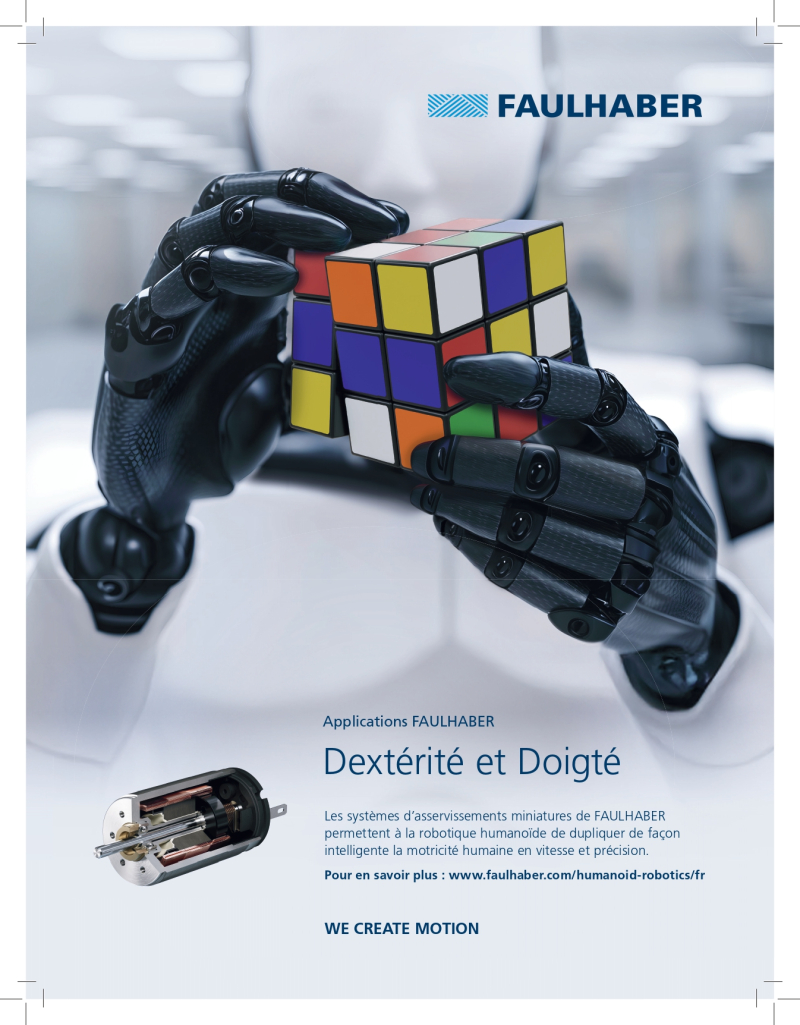
Kai scientific
Kashiyama Europe GmbH
Vous souhaitez en savoir plus ?
Pour toute information complémentaire sur Kashiyama et ses solutions, vous pouvez contacter : keg@kashiyama.com
Kashiyama Europe GmbH site web


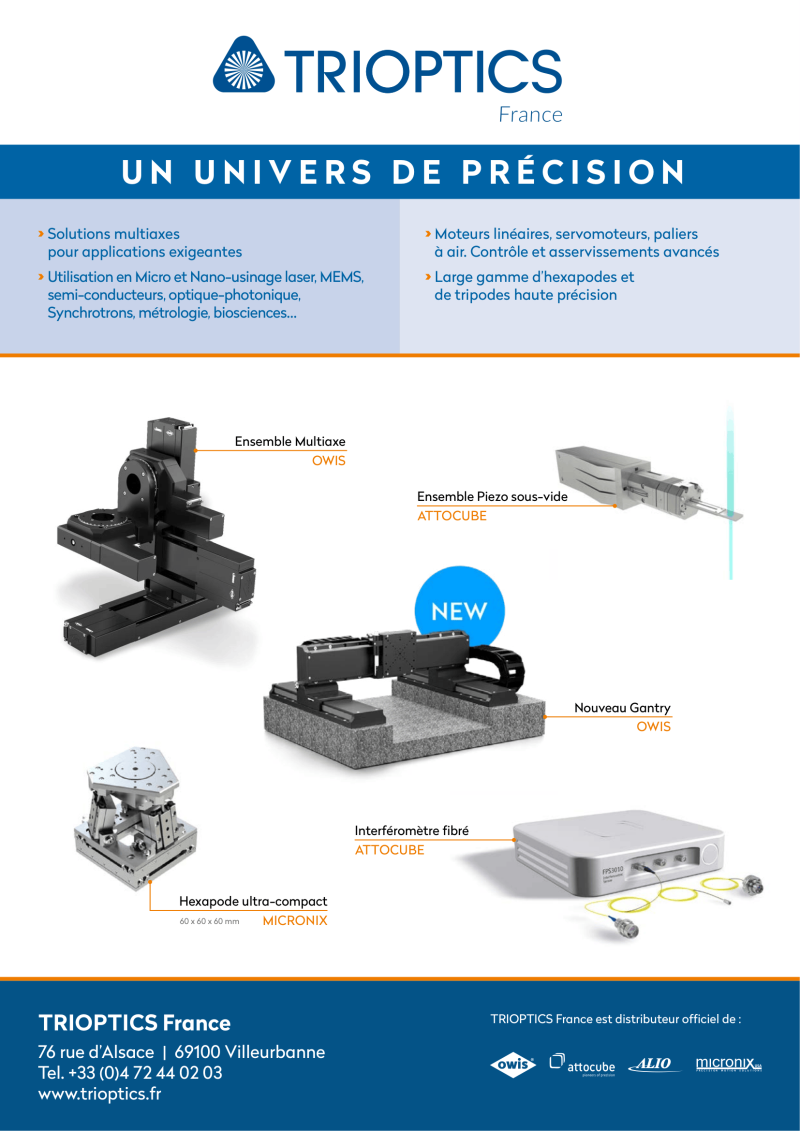
Trioptics
Accès à SOLEIL
List of hotels (not limited)
Hôtel Les Chevaliers des Balances - près de SOLEIL
Place de la Mairie - 91190 SAINT-AUBIN
Tél.: +33 (0)1 69 41 20 55 - Fax: +33 (0)1 69 85 50 75
E-mail: leschevaliersdesbalances@gmail.com
Web: www.leschevaliersdesbalances.fr
Hôtel Le Village**
4 rue Neuve - 91190 GIF-SUR-YVETTE
Tél.: +33 (0)1 69 28 82 51 - Fax: +33 (0)1 69 28 53 93
E-mail: hotel.le.village@wanadoo.fr
Web: http://hotellevillage.fr/
Hôtel d'Orsay - près du RER B
2 rue François Leroux - 91400 ORSAY
Tél.: +33 (0)1 64 86 17 47 - Fax: +33 (0)1 64 86 17 48
E-mail: hotel.orsay@orange.fr
Hôtel B&B
Plateau du Moulon - 91190 GIF-SUR-YVETTE
Tél.: +33 (0) 892 78 80 91 - Fax: +33 (0)1 69 35 34 59
Web: http://www.hotel-bb.com/
Hôtel Campanile Paris Sud
9 Ter Rue Joliot Curie - 91190 GIF-SUR-YVETTE
Tél.: +33 (0) 1 84 00 85 35
Web: https://www.campanile.com/fr/hotels/campanile-paris-saclay
Appart Hôtel Residhome Bures-Sur-Yvette La Guyonnerie
1 Rue de la Guyonnerie, 91440 BURES-SUR-YVETTE
Tél.: +33 (0) 1 64 86 36 00
Web: https://www.myresidhome.com/bures-sur-yvette/residhome-bures-la-guyonnerie/apparthotel-residence-hoteliere.html
Pour toutes informations complémentaires, merci de contacter :
conf-sciencefrontiers2026@synchrotron-soleil.fr
SOLEIL BBUS-Évènements
L’orme des Merisiers
Départementale 128
91190 Saint-Aubin
FRANCE