RESEARCH ON OUR SITE


A plateform unique in the world

Research Contents > European research platform for ancient materials IPANEMA > A plateform unique in the world

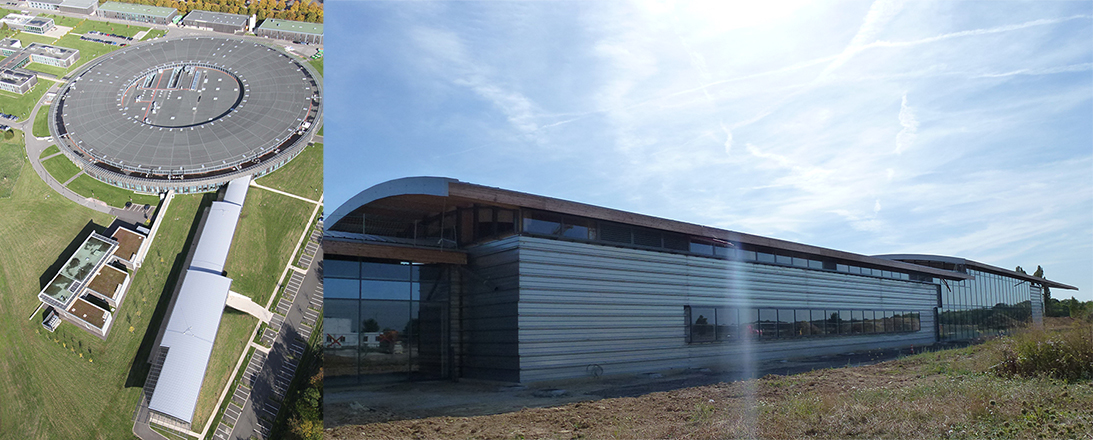
IPANEMA is a service and research platform dedicated to ancient materials (archaeology, cultural heritage, paleontology and paleoenvironments) currently under development at SOLEIL. The project includes the construction of a dedicated building (in progress) and a new synchrotron beamline optimized for ancient materials that will complement the facilities already at SOLEIL. The group, brought together within the IPANEMA CNRS unit, is at the moment occupying temporary premises at SOLEIL, and has supported the synchrotron work since 2008 while also developing a transverse research methodology.

Activities Scientific Council
Partners Infrastructure
A facility open to exchanges 4 larger groups
Activities

Since 2006, archeologists, paleontologists, scientists involved in the conservation of ancient environments, have been meeting at SOLEIL synchrotron to design the facility that will best suit their research needs. IPANEMA was born as a result of this multidisciplinary reflection and is now under construction.
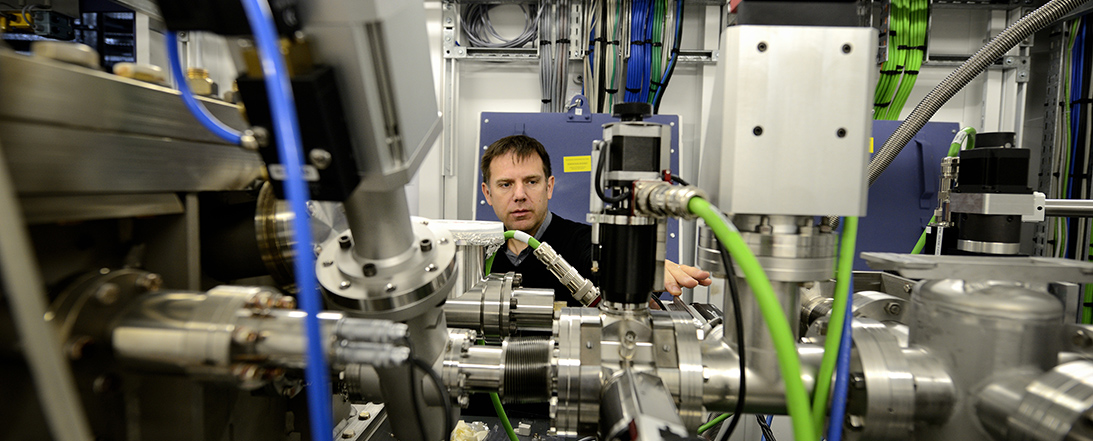
The IPANEMA platform project will eventually consist of two components: a new building adjacent to SOLEIL synchrotron to facilitate the preparation and analysis of micro-samples, ancient artifacts and old masterpieces (expected to open in 2013) and PUMA, a synchrotron beamline optimized for ancient materials that will be set up under the auspices of IPANEMA (opening 2014 to 2015), as part of a joint research and dedicated service unit.
Research requiring the study of large archaeological or historical artefacts etc. will receive greater support to access all SOLEIL beamlines and other facilities. The new building will facilitate the storage and transport of specimens and objects on the SOLEIL beamlines in compliance with best practice.
The group responsible for the platform is at present occupying temporary premises at SOLEIL. It is carrying out two activities aimed at encouraging cutting-edge research on ancient materials:
• supporting the use of synchrotron analytical methods for scientists housed at the synchrotron,
• developing original methodology research in photon analysis and data processing. 
 

Scientific Council

An Advisory Board of Scientific Orientation of IPANEMA (CCOSI: Conseil Consultatif d’Orientation Scientifique d’IPANEMA) including independent experts and representatives of communities was established to guarantee the independence and the quality of the researches made on the platform.
It is held twice a year since 2010 (13/09/2010; 22/03/2011; 07/09/2011).

President:
Prof. Tim WESS: Head of School of Optometry and Vision Sciences - Université de Cardiff.

Vice-president:
- Dr. Martine REGERT: Directrice de recherche CNRS - Centre d'Etudes Préhistoire, Antiquité, Moyen-Age (CEPAM UMR6130)

Members:
- Dr Karim BENZERARA: Chargé de recherche - Institut de Minéralogie et de physique des milieux condensés (IMPMC) - CNRS
- Dr Agnès DESOLNEUX: Chargée de recherche - Laboratoire MAP5 (Mathémathiques Appliquées à Paris 5)
- Prof. Joris DIK: Professor - Group Structure & Change in Materials (Delft University of Technology)
- Dr. Philippe DILLMANN: Responsable du Laboratoire Archéomatériaux et Prévision de l'Altération (IRAMAT LMC CNRS)
- Dr. Girolamo FIORENTINO: Laboratorio di Archeobotanica e Paleoecologia - Dipartimenti di Beni Culturali (Università del Salento)
-Dr. Jean-Louis HODEAU: Directeur de recherche CNRS - Institut Néel CNRS UPR5031
- Dr. Philippe JANVIER: Directeur du Centre de Recherche sur la Paléobiodiversité et les Paléoenvironnements UMR7207 (Muséum National d'Histoire Naturelle)
- Dr. Pierre LEVITZ: Directeur de recherche CNRS - Laboratoire PMC (Ecole Polytechnique)
- Dr. Michel MENU: Directeur scientifique du Laboratoire du Centre de Recherche et de Restauration des Musées de France (LC2RMF, UMR171)
- Dr. Costanza MILIANI: Senior researcher - Instituto CNR Scienze e Tecnologie Molecolari (Sez. di Perugia c/o Dipartimento di Chimica)
- Dr. Aliz SIMON: Senior researcher fellow - NAPC/Physic Section (Institute of Nuclear Research of the Hungarian Academy of Sciences)
-Dr Jean SUSINI: Directeur de la Division Développement et Service Instrumentation (ESRF Grenoble)
-Dr Jean-Denis VIGNE: Directeur UMR7209 Archéozoologie, Archéobotanique - Muséum National d'Histoire Naturelle


Infrastructures

As a temporary laboratory operating since the opening of SOLEIL, the ancient materials preparation room is dedicated to the following subjects: archeology, paleontology, ancient environments and conservation science. Eventually this equipment will be available as part of the IPANEMA platform and PUMA beamline.
Implementation of IPANEMA’s new facility includes two major operations on the SOLEIL site: construction of the platform’s building and that of the PUMA synchrotron beamline.
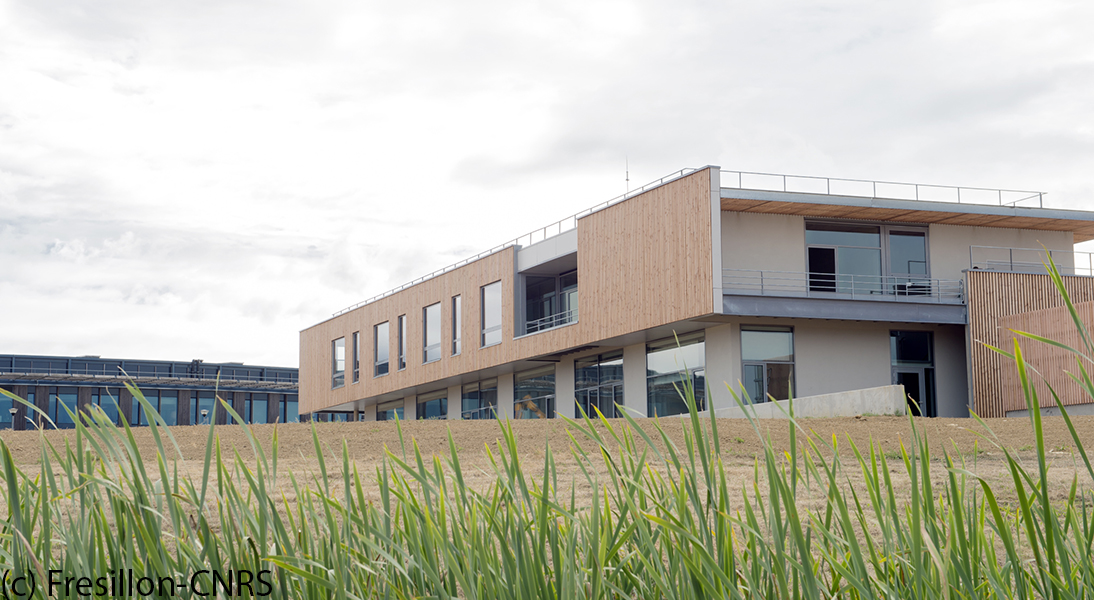
The new building (opening 2013) will include two main areas:
- Office space and meeting rooms for the use of guest scientists and IPANEMA unit group members,
- Laboratories and storage space for preliminary analysis and sample preparation for synchrotron studies.
The premises have been architecturally designed to be compatible with the presence and the study of heritage material and the upkeep, routine maintenance and use of the building’s technical premises (laboratories, etc.). It will provide a convivial atmosphere in the office area (to encourage exchanges and communication between users of the building).
Construction of the IPANEMA building has followed the XP-X80-001 standard (Conservation of Cultural Property - Conservation center). Access to the synchrotron building allows the movement and transport of objects and specimens.
Setting up IPANEMA has also taken into account environmental quality. The aim has been to minimize the platform’s impact on the environment, limit energy consumption (by improving energy efficiency, limiting pollutant emissions and reducing waste) and create a healthy and comfortable indoor environment for the groups housed there. 


The research and services platform IPANEMA will cover 1,800 sq.m on the SOLEIL synchrotron site.


Construction and operating partners

IPANEMA’s construction and equipment are being funded equally by the French State and Ile-de-France in the framework of the 2007-2013 state-regional project contracts (CPER).

The IPANEMA unit is being set up jointly by SOLEIL, the CNRS, the Culture and Communication Ministry and the French National Museum of Natural History.

On 1st January 2010, the IPANEMA unit (UPS 3352) of the CNRS was set up, a forerunner of the mixed services and research structure that will shortly be established with its partners. [Further information on IPANEMA’s partners]


4 large user groups

IPANEMA was designed with the help of four working groups and the permanent group being formed to run it. The working groups consisted of members of the scientific communities involved: Archaeology / Archaeometry, paleontology, ancient environments and conservation sciences. They have been meeting since 2008 to define the objectives and how the platform shall function. They have thus been directly involved in defining how to run the platform and its equipment. These four working groups at SOLEIL have brought together over a hundred scientists working on ancient materials.
 

Paleontology

In paleontology, the development of 3D imaging methods such as X-ray micro-tomography has been a real technological revolution. As samples no longer have to be sectioned, these techniques allow the internal structure of fossils to be visualized on an ever finer scale, now possible to a fraction of a micrometer. Presently under development, implementing these methods (phase contrast ...) will permit the morphology of areas to be distinguished that are completely indistinguishable by all conventional methods. 2D imaging methods will also provide biological and phylogenetic (evolutionary) information.
Reconstructions on Precambrian fossil embryos are being used to describe the major stages of embryogenesis in the first Metazoans [Donoghue et al.].
 

Paleoenvironments

Micro-beam analysis techniques provide information on the environmental reconstruction of ancient sites and of past climates.
The platform is involved in work going beyond objects alone, but also looking at the environmental context of archaeological and palaeontological sites, how objects deteriorate over time and long-term climate change. Data from the past crucial to understanding the environment and the climate of tomorrow.

By studying the trace element composition of stalagmites it has been possible to follow past climatic changes in yearly cycles [Genty et al.].
 

Archaeology

Archaeology is the discipline that is currently using the most synchrotron techniques on ancient materials. These techniques provide essential information on how objects were produced (provenance, how far they travelled, technologies used), their uses and their contexts.
Synchrotron techniques make it possible to study extremely diverse ancient materials: metals, ceramics, glass, textiles, lithic materials, organic remains, dyestuffs, etc.

For example, synchrotron X-ray microanalysis methods have helped clarify the stages of production of ferrous archaeological objects and track the distribution of metallurgical processes in Europe [Dillmann et al.]
 

Conservation science

En sciences de la conservation, les techniques synchrotron conduisent à une meilleure compréhension des processus d'altération du patrimoine mobilier, du patrimoine bâti et permettent notamment d'évaluer l'efficacité des traitements appliqués en restauration. En outre, l'utilisation de méthodes micro-faisceau permet d'identifier la "main de l'artiste" à partir de signatures moléculaires d'ateliers ou d'artistes.
Le couplage de méthodes de micro-fluorescence X et micro absoprtion X a permis de comprendre le processus de dégradation du bois d'épaves anciennes, entraînant le développement de traitements appliqués à des navires entiers [Sandström et al.]

 Team of IPANEMA

 Our publications

 Access and operation

 News and events of IPANEMA


FP7-CHARISMA
Access of European users of ancient materials

 IPANEMA newsletter

 SOLEIL beamlines

Partenaires IPANEMA


Accueil