Aller au menu principal
Aller au contenu principal
Venir à SOLEIL
Annuaire & contacts
Accès intranet
FR
EN
À propos de SOLEIL
Nous connaitre
Nous rejoindre
Recherche
Recherche Interne
Collaborations et projets de recherche
Sources et Accélérateurs
Plateformes
Savoir-Faire
Supports aux utilisateurs
Laboratoire de Métrologie Optique (LMO)
Lignes de lumière
Par domaines d'énergie
Localisation des lignes
Utilisateurs
Demande de temps de faisceau
Évaluation des projets
Préparer son expérience (scientifique)
Préparer son expérience (administratif)
Après l'expérience
ORGanisation des UtilisatEurs de SOLEIL (ORGUES)
Entreprises
Caractérisation de matériaux
Développements technologiques et valorisation
Autres prestations specifiques
Nos engagements
Documentation
Publics
Partager la culture scientifique
Se documenter
Découvrir nos vidéos
Visiter SOLEIL
Entrez votre recherche
Accueil
>
Événements
Événements
Séminaire
Workshop
Autre événement
Vous êtes
- Tout -
Entreprise
Grand public
Utilisateur / chercheur
Date
Start date
Date
E.g., 04/06/2024
End date
Date
E.g., 04/06/2024
20-21 juin 2024
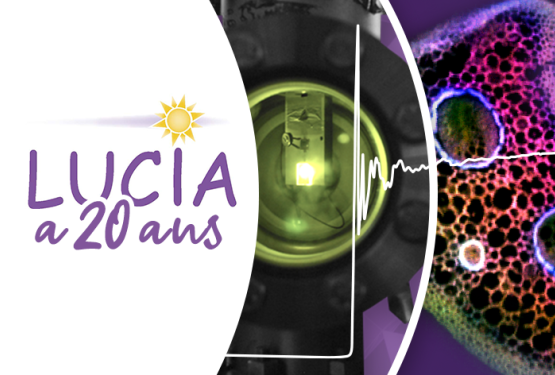
LUCIA a 20 ans
LUCIA a 20 ans
Lire la suite
June 17-21, 2024
Science@FELs 2024
Nous sommes heureux de vous inviter au Synchrotron SOLEIL et à Sorbonne Université (Paris) à la conférence « Science at FEL » (17 au 19 juin 2024) et au « Forum on Advanced...
Lire la suite