RESEARCH ON OUR SITE
 
 
SOLEIL Company Contents > All the news > Workshops > 2011 > SatelliteIPANEMA11


Satellite Workshop
" IPANEMA2011 - Synchrotron radiation for Ancient Materials "

January 17th-18th, 2011
    

Workshop IPANEMA2011 Poster

Users' Meeting 2011 website


Latest synchrotron results in the field
Discussions on key developments of IPANEMA, and the PUMA beamline


Program
Committees
Registration
Pratical Information
Contact

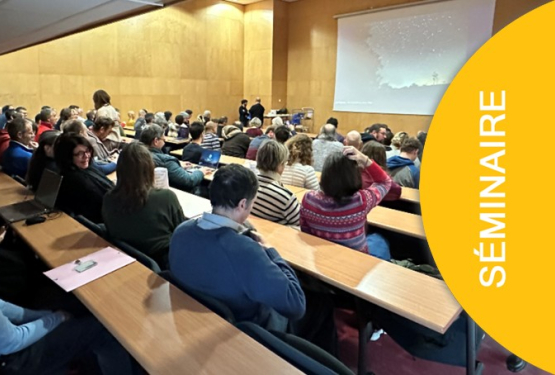
The workshop "IPANEMA 2011 - Synchrotron radiation for ancient materials" will take place on Monday 17th afternoon and Tuesday 18th January 2011 at the Auditorium Bloch located at CEA L’Orme des Merisiers (next to SOLEIL). It is organized as a satellite event of the SOLEIL Users' Meeting 2011
   
     
Synchrotron radiation techniques, and corresponding developments of optimised analytical methodologies, are fast growing approaches for the study of ancient and historical materials. This is based on developments in synchrotron X-ray fluorescence, absorption, diffraction, tomography and Fourier-transform infrared spectroscopy, but also new techniques in the soft X-ray range, or based on UV-visible spectroscopy, etc. The ancient materials' European platform IPANEMA, dedicated to research activities on historical and ancient materials, is currently being built at SOLEIL with CNRS, MNHN and the Ministry of Culture.
  

The 2-day workshop is targeted to scientists from archaeology, palaeontology, conservation and past environments sciences, either already using synchrotron techniques or interested in dwelling on them. The program will include plenary lectures and scientific presentations of the latest results in the field from experiments performed at the SOLEIL beamlines and at other synchrotron facilities. Presentations and a round table will be dedicated to key methodological developments of IPANEMA, including the PUMA beamline. 
    
  
This workshop is the continuation of the definition work performed by the IPANEMA working groups since 2008 (100 scientists involved).

Accueil