Highlights 2010 online
Check out the first issue of SOLEIL’s Highlights, which compiles the main scientific results of SOLEIL in 2010.
|
When UV light from the DISCO beamline highlights… potato chips
Will it soon be possible not to dread climbing on the scales after eating French fries? Potato chips that are crispy and tasty but not greasy ... a dream! A dream that the research group headed by Olivier Vitrac, a researcher at INRA AgroParisTech on the Massy site, as well as staff on the DISCO beamline, are aiming to achieve by trying to understand a crucial stage in frying, which depends on the final oil content of the food being fried. How? By studying, under the microscope, the fluorescence emitted by potato strips bathed in hot oil ... Warning: the synchrotron is being turned into a deep fryer
|
Speciation of actinides in the environment - in situ characterization in an electrochemical cell using X-ray spectroscopy
Actinides (An), because of their electronic structure, may be found in various oxidation states, with AnO2+ and AnO22+ oxygen species at the +V and +VI states. The environmental behaviour of actinides is controlled by their oxidation state but also by the presence or absence of ligands. Actinides in their reduced form are generally found in the solid state (UO2 (s), for example) or colloidal phases. They can also be complexed with ligands such as natural organic matter, resulting in greater mobility and bioavailability...
|
CASSIOPEE beamline The true nature of a model interface finally revealed
Combining photoemission spectroscopy, scanning tunneling microscopy/spectroscopy and ab initio calculations allowed to determine the structural model of the alkali-metal/Si(111):B interface.
|
First photons on NANOSCOPIUM: all of the SOLEIL beamlines have seen the light!
On Tuesday 29th November, the first photons were observed in the first hutch of NANOSCOPIUM, SOLEIL’s 26th beamline.
This was a double first for SOLEIL: producing two photon beams from two canted* undulators on a beamline, and using a cryogenic undulator as a light source.
NANOSCOPIUM will make it possible to perform structural and chemical analysis of cells, tissues, and geobiological systems thanks to cutting-edge hard x-ray nano-imaging techniques.
*canted: To install two beamlines that come from the same straight section of the storage ring, the axes of the two undulators are offset from the axis of the straight section by a certain angle.

|
Imaging molecular potentials of ‘hidden’ states
In a world with 7 billion people, scientific innovation is paramount and understanding the fundamentals is essential as a stimulus to industrial progress harmless for the environment and based on sustainable resources. The better researchers understand molecules, either isolated or in various environments, the more efficient they will be in designing new materials...
|
VIDEO: The plant that loved heavy metals
Arabidopsis halleri is a plant whose surprising characteristic is to grow in soil contaminated with heavy metals, and even to store the metals in its leaves. But, in exactly what parts of the leaves, and why aren’t they toxic for the plant? Studies are carried out on LUCIA beamline to answer these questions.
> See the film "The plant that loved heavy metals"
|
High- resolution energy fluorescence on MARS
The MARS beamline, through a partnership with FAME, the French beamline at ESRF, has just installed a 4-crystals spectrometer to perform high energy resolution X-ray absorption spectroscopy. This equipment is particularly suitable for the study of highly radioactive samples.
|
When lack of oxygen favors magnetism
Zinc oxide is a simple material, which is currently experiencing a strong resurgence of interest. Thus, zinc, cobalt and oxygen-based alloys (Zn1-xCoxO)have enormous potential in terms of technological applications for the manufacture of miniaturized modules for micro-and optoelectronics...
|
Boosting memory capacity with Prussian blue
Prussian blue has been prized by artists since the 18th century. Today, scientists are taking a keen interest in this pigment by studying what happens when some of its iron atoms are replaced by cobalt atoms. Research is carried out on the infrared beamline AILES.
> See the film "Boosting memory capacity with Prussian blue"
|
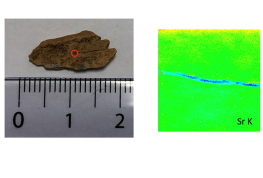
Osteoporosis and strontium – A research carried out on DIFFABS Beamline
Osteoporosis is a major public health problem that affects about one in three women and one in seven men over 50 years - a total of 150 million people worldwide. Responsible for a decrease in bone mass, the disease leads to a weakening of the skeleton resulting in fragility fractures. Among proposed treatments, drugs containing strontium, an element close to calcium, have proved effective in increasing bone mass and reducing the risk of fracture in postmenopausal women.
|
A hole in the ring ... to see photons at atmospheric pressure
Question: on a synchrotron, how can you study samples in the VUV1 spectral range that don’t support being placed under conditions of very low pressure?
Answer: don’t put them under very low pressure!
Subsidiary question: how do you obtain VUV at atmospheric pressure?
The answer lies in an ingenious differential pumping system developed by several teams at SOLEIL. Here’s how.
|
How do bones turn into fossils?
What happens, on the molecular level, when bones become fossilized? Diagenesis does not occur evenly, which makes it more difficult to preserve bones, both on archaeological sites and in museum collections. Scientists at C2RMF, MNHN and at SOLEIL have developed an experimental protocol for preparing and then analyzing bone samples in order to determine their molecular composition and structural properties.
|
Open season on sulphur
The sulphur emitted during the combustion of fuels in vehicle engines forms sulphur oxides, which contribute to acid rain, and it also participates to increased greenhouse gas emissions. The SAMBA beamline allows the “hunt for sulphur”, a chemical reaction involving hydrogen and a metallic catalyst, to be monitored live. By controlling this type of reaction, the longer term goal is to completely remove all undesirable sulphur from diesel fuel and petrol.
> See the film "Open season on sulphur"
|
And yet, they spin! A world first observation on PLEIADES: the rotational Doppler effect on molecules
As spectroscopists know well, several factors cause peaks’ broadening when photoemission measurements are recorded, thus altering the information that can be extracted from these measurements. Among these factors, some are linked to the performance of the equipment used in the experiment, others to physical parameters of the sample (pressure, temperature etc.). The translational Doppler broadening is one such case.
|
Why have painter Murillo's skies turned grey?
Scientists from SOLEIL have found the key of a blue pigment fading on historic paintings, like Murillo's or Veronese's ones.
|
Biomimetic nano-objects: controlling their assembly
Researchers from CEA, CNRS and the pharmaceutical laboratory Ipsen have recently shown, using the SWING beamline of SOLEIL, that it is possible to generate peptide nanotubes with precisely controlled diameters.
--> Press release "Biomimetic nano-objects: controlling their assembly"
--> SWING beamline
|
Study on superconductors at high temperature on the CASSIOPEE beamline
A new family of superconductors, called iron pnictides was discovered in March 2008. This concerns iron and arsenic-based compounds arranged in square lattice formation, the transition temperature of which can reach 50K. We recall that conventional superconductivity takes place at temperatures close to absolute zero.
|
UPMC invests in SOLEIL synchrotron: a new environmental photoemission set-up will soon be available on the TEMPO beamline
The TEMPO synchrotron beamline (soft X-rays, 50-1500 eV) is dedicated to the dynamic study of the electronic and magnetic properties of materials. Available to users since January 2008, at present TEMPO is equipped with an experimental station able to perform X-ray photoemission and X-ray absorption spectroscopy experiments under ultra-high vacuum conditions (10-11 mbar, the ambient pressure being ~1000 mbar).
|
IPANEMA is a member of the new multiple-site “PATRIMA” Laboratory of Excellence
On 25th March 2011, The French Prime Minister presented, together with the Minister of Higher Education and Research and the General Commissioner for Investment, the list of the 100 projects to be funded as "Laboratories for Excellence" of France. These 100 projects included “PATRIMA”, of which IPANEMA is a partner, the European platform for ancient materials studies at SOLEIL.
|
Arthritis and using X-rays to track calcium compounds
Osteoarthritis (OA) is the most common form of rheumatologic pathology. OA is a disease of all the joints which leads eventually to the destruction of articular cartilage. It has a complex physiopathology that involves genetics, aging, mechanical factors and mineralization of the cartilage. Arthritic cartilage samples taken during arthroplasty are always calcified and the extent of this calcification correlates with the severity of the arthritis. However, few physico-chemical data exist on this calcification that alters joint function significantly.
|
PSICHÉ, high-energy photons for tomography and studies in extreme conditions
A new stage has just been reached: on 8th February 2011, the first photons entered the optical hutch of the PSICHÉ beamline. Everything is now going to fall into place for the beamline to be opened to users in 2012. Jean-Paul Itié, in charge of PSICHÉ, explained a few points to us.
|
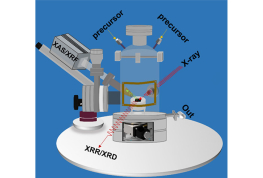
Conservation of ancient manuscripts: with or without oxygen?
It is generally accepted that paper deterioration in ancient manuscripts due to the presence of iron gall inks results mainly from two phenomena: hydrolysis and oxidation. Recently, scientists from the Centre de Recherche sur la Conservation des Collections and Antwerp University in Belgium, have just shown that the main cause of degradation in manuscripts is oxidation. These studies were carried out notably on the SOLEIL (DIFFABS beamline) and HASYLAB synchrotrons.
> Press release "Conservation of ancient manuscripts: with or without oxygen?"
> See the SOLEIL video "A less than sympathetic… sort of ink"
> DIFFABS beamline
|
A miniature comet on the SMIS beamline
An Interplanetary Dust Particle (IDP) of cometary origin provided by NASA was analyzed in the laboratory with infrared spectroscopy (2 ¬ 60 µm), Raman, and FESEM-EDX analyses, in the framework of the analysis of cometary materials performed by the “Institut d’Astrophysique Spatiale” (IAS, Orsay) in the Astrochimie et Origines team, in collaboration with the SMIS beamline at SOLEIL and Università di Napoli “Parthenope” (Italy).
|
Synchrotron radiation to view the luminescence of ancient materials
Ultraviolet luminescence techniques have been used by restoration specialists and scientists in museums for decades, providing a (usually qualitative) analysis of art and heritage materials. By exploiting the analytical capabilities of the DISCO beamline, whose monochromatic beam supplies two visible-UV microscopes, a new approach has just been developed to characterize the luminescence of ancient materials. The luminescence spectra obtained at high spectral and spatial resolutions have made it possible to identify previously hard-to-identify constituents of musical instruments and pictorial works...
|
Studying Titan’s atmosphere, a "frozen early Earth", to improve our understanding of the beginnings of life
Titan, the largest satellite of Saturn, is the site of intense chemical activity, particularly in its upper atmosphere where gases are irradiated by the sun’s UV rays . Titan could, through its similarities to Earth, help to understand by what (photo) chemical processes the first molecules of life appeared. This has been the work of one the LATMOS groups, users of the SMIS and DISCO beamlines.
|
Dating exotic trees – green ebony under DIFFABS X-rays
If you cut down a tree in our temperate forests, a cross-section through the trunk shows a series of concentric circles, dark rings, which we are taught at school as being related to the age of the tree. But the study of tree rings, known as dendrochronology, brings a wealth of information that goes well beyond the age that the tree has written within it.
|
 |