RESEARCH ON OUR SITE


News 2011

SOLEIL Company Contents > All the news > News 2011
 
Best wishes 2012


The SOLEIL “NanoimagesX” project

The project “NanoimagesX” for building and operating the Nanotomography beamline at synchrotron SOLEIL
is funded by the Ministère de l’Enseignement Supérieur et de la Recherche et le Commissariat Général à l’Investissement in the second phase of the « Investissement d’Avenir ». The purpose of the NanoimagesX project is to build and operate at SOLEIL, the French 3rd generation synchrotron source, a high flux, coherent X-ray, Nanotomography long beamline dedicated to ultra-structural and functional studies. This world-leading, full-field 3D imaging facility of matter in native conditions, will be open to academic and industrial users, and optimized to support challenging scientific and R&D projects from many research fields, with a focus on Advanced and Complex Material Sciences and Biomedical Sciences.
The Nanotomography beamline will operate in the X-ray energy range 5- 25 keV, which is best suited for imaging heterogeneous materials at the meso- and nanoscale, and soft biological matter. The beam transport concept ensures optimized flux density and coherence conditions for all accessible length scales, an essential prerequisite for multi-scale studies and investigation of hierarchical structures of intact samples with volumes up to many cm3, as well as for time-resolved fast tomography for documenting in-situ samples “at work”. By providing intense, highly coherent and strongly collimated X rays at 200 meters from the undulator source, this beamline will be unique in Europe.

http://media.enseignementsup-recherche.gouv.fr/file/Fiches_equipex_vague_2/06/5/NANOIMAGESX_203065.pdf


An agreement between France / Sweden signed on December 21

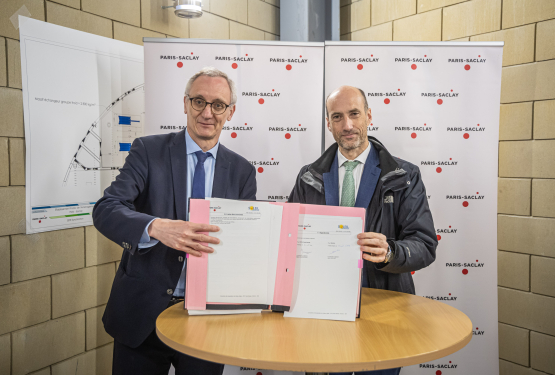
An agreement between SOLEIL and the Swedish Research Council was signed on December 21 in Lund in the presence of the ambassador of France. This collaboration works within the intergovernmental agreement on the Franco-Swedish ESS concluded in December 2010 by the Research Ministers of both countries. The agreement provides  a 10 million € funding over 5 years  for collaborative action research and instrumental developments with SOLEIL  for application  in the Swedish synchrotron MAXIV. The six broad areas were selected for this collaborative work : control systems for synchrotron radiation facilities, instrumental developments in nano-beamlines, optimization and construction of insertion devices, beamlines and development  of environments for samples, beam instabilities and pulsed elements, ultra-short pulses. A steering committee will be established between SOLEIL and MAXIV to finalize and planned these actions.

> Article on embassy website


250 pupils have already experienced SOLEIL pursuit

After participating in several events during the Science Festival, SOLEIL set up its new educational project "SOLEIL Pursuit" on November 7th. Already eight classes were welcomed in November to face the various scientific challenges to be found along the route round the synchrotron. Many more will participate in 2012. Note that seven new slots have been added to the Spring program, as the others are already fully booked. This initiative is being supported by the Ile de France Region, the Versailles Academy and Paris Sud University.


First photons on NANOSCOPIUM: all of the SOLEIL beamlines have seen the light!

On Tuesday 29th November, the first photons were observed in the first hutch of NANOSCOPIUM, SOLEIL’s 26th beamline.
This was a double first for SOLEIL: producing two photon beams from two canted* undulators on a beamline, and using a cryogenic undulator as a light source.
NANOSCOPIUM will make it possible to perform structural and chemical analysis of cells, tissues, and geobiological systems thanks to cutting-edge hard x-ray nano-imaging techniques.

*canted: To install two beamlines that come from the same straight section of the storage ring, the axes of the two undulators are offset from the axis of the straight section by a certain angle.

Deux faisceaux NANOSCOPIUM


Imaging molecular potentials of ‘hidden’ states

In a world with 7 billion people, scientific innovation is paramount and understanding the fundamentals is essential as a stimulus to industrial progress harmless for the environment and based on sustainable resources. The better researchers understand molecules, either isolated or in various environments, the more efficient they will be in designing new materials...


VIDEO: The plant that loved heavy metals

Arabidopsis halleri is a plant whose surprising characteristic is to grow in soil contaminated with heavy metals, and even to store the metals in its leaves. But, in exactly what parts of the leaves, and why aren’t they toxic for the plant? Studies are carried out on LUCIA beamline to answer these questions.

> See the film "The plant that loved heavy metals"


An earlier diagnosis to avoid kidney transplants

An analytical technique using high brilliance infrared light produced by the SOLEIL synchrotron has been developed by teams from the CNRS, Paris Sud University, Tenon Hospital in Paris, and the Stoke-on-Trent Cancer Centre (GB) to study the calcification present in the kidneys of patients with renal failure.


Start of the NANOSCOPIUM beamline construction

Construction of the long NANOSCOPIUM beamline started on 19th October 2011. The work is scheduled over 12 months and follows very detailed preparation of the land to meet the stability requirements of this unique X-ray imaging beamline. NANOSCOPIUM will permit the structural and chemical analysis of cells, tissues and geobiological systems, using the latest 2D and 3D hard X-ray nano-imaging techniques, with very high spatial resolutions of 30 nm.


Discover a work on the SOLEIL’s parking

From 21 to 30 November 2011 (except Sunday), discover the installation " La lumière ne s'arrête pas là" (Light does not stop there)...


High- resolution energy fluorescence on MARS

The MARS beamline, through a partnership with FAME, the French beamline at ESRF, has just installed a 4-crystals spectrometer to perform high energy resolution X-ray absorption spectroscopy. This equipment is particularly suitable for the study of highly radioactive samples.


“Science of Art” Festival

At the request of the General Council of the Essonne, SOLEIL will be the scientific partner of the 2011 Science of Art Festival dedicated to light, which takes place from 5th November to 5th December 2011. Several projects already involve scientists at SOLEIL: Stefan Kubsky, Head of the Surfaces Laboratory, has supported Flavien Théry; Patrick Lefèvre, scientist on the CASSIOPEE beamline and Matthieu Réfrégiers In charge of the DISCO beamline, took a scientific approach to the work of Michel Semeniako, while Jean-Louis Marlat and his Design Engineering group contributed to the creation of "light does not stop there", an original work combining digital art, space-time physics and light. This project has already caught the attention of the leading French center for creating digital art, "LE CUBE", and will carry SOLEIL’s “colors” during the festival. The work "light does not stop there" will be on show from the 5th -13th November at Sciences ACO on the Orsay faculty campus, then from 14th November to 5th December at SOLEIL.

> More information on the website "Conseil général de l'Essonne"
> Program of the festival


The 2011 ICALEPCS price was awarded to the Tango Community

ICALEPCS is the international conference that brings together experts in systems control and monitoring of large installations of experimental physics. The third edition was held from October 10 to 14, 2011 in Grenoble and rewarded Nicolas Leclercq (SOLEIL), Emmanuel Taurel and Pascal Verdier (ESRF) for their collective and invaluable contribution in the development of TANGO, the software at the heart of control accelerators and beamlines of several synchrotrons, among the best. Today with ESRF and SOLEIL, MAX4 (Sweden), DESY and ANKA (Germany) ELETTRA (Italy) and ALBA (Spain) have adopted TANGO too.


When lack of oxygen favors magnetism

Zinc oxide is a simple material, which is currently experiencing a strong resurgence of interest. Thus, zinc, cobalt and oxygen-based alloys (Zn1-xCoxO)have enormous potential in terms of technological applications for the manufacture of miniaturized modules for micro-and optoelectronics...


SOLEIL received the "Apprenticeship challenge" trophy

SOLEIL received the "Apprenticeship challenge" trophy on 20th October, presented by the Chamber of Commerce and Industry of the Essonne Département in the context of its "Dare apprenticeship" operation, with the objective of highlighting companies that regularly recruit apprentices. As Nadine Morano, Minister in charge of apprenticeship and vocational training, could not be present, the ceremony was chaired by Pierre Lambert, prefect responsible for equal opportunities. The Essonne Département and the Ile de France Region were also represented.


Nanoparticles, 2000 years of history

Nanoparticles were already used in ancient Rome and during the Middle Ages to colour glass cups or make stained glass iridescent. But the phenomenon was not understood until the beginning of the 20th century…

> See the film "Nanoparticles, 2000 years of history"


SOLEIL accelerates research and industrial innovation

Since SOLEIL opened it doors to outside users in January 2008, the use of beamlines to solve industrial problems has grown, now reaching about 25 projects per year, evenly distributed between turnkey services and projects selected by the program committees, which represents about 5% of the total annual external projects for synchrotron experiments.


2012 machine schedule
The machine schedule for 2012 is now available.
Altogether, 5328h will be dedicated to the beamlines.


Fête de la science 2011

For the 20th annual Science Festival focusing on “International Chemistry Year”, SOLEIL is taking numerous workshops to two locations in Vélizy (Yvelines) and Gif-sur-Yvette (Essonne). On 14, 15 and 16 October, you will find us at Le Moulon gymnasium, on 15 October at the Onde Cultural Centre in Vélizy, and on 15-16 October at the Salle de la Terrace in Gif.


VIDEO: What is a nanometre?

A nanometre represents one billionth of a metre. Numerous nano-sized objects may be found in nature, but man has recently become capable of producing them as well...

> See the film "Open season on sulphur"


Boosting memory capacity with Prussian blue

Prussian blue has been prized by artists since the 18th century. Today, scientists are taking a keen interest in this pigment by studying what happens when some of its iron atoms are replaced by cobalt atoms. Research is carried out on the infrared beamline AILES.

> See the film "Boosting memory capacity with Prussian blue"


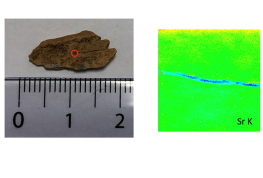
Osteoporosis and strontium – A research carried out on DIFFABS Beamline

Osteoporosis is a major public health problem that affects about one in three women and one in seven men over 50 years - a total of 150 million people worldwide. Responsible for a decrease in bone mass, the disease leads to a weakening of the skeleton resulting in fragility fractures. Among proposed treatments, drugs containing strontium, an element close to calcium, have proved effective in increasing bone mass and reducing the risk of fracture in postmenopausal women.


16 septembre 10h00 - 1ère pierre IPANEMA

A la veille des Journées européennes du patrimoine, vous êtes invités le 16 septembre 2011 à la présentation du site d’IPANEMA par le ministère de l’Enseignement supérieur et de la Recherche, le ministère de la Culture et de la Communication et la Région Île-de-France, en présence des partenaires du projet : le CNRS, le Muséum national d’histoire naturelle, le synchrotron SOLEIL et NWO.

Télécharger l'invitation


Amor Nadji has been appointed Director of SOLEIL’s Sources and Accelerators Division

Amor NadjiAfter a PhD in nuclear physics, Amor Nadji turned to accelerator physics in 1990, when he joined the LURE teams in Orsay. Involved in “the SOLEIL adventure” since the pilot study stage, he has been the manager of the Physics and Accelerators Group since 2002; he also was the in-house expert for all commissioning aspects1 of the storage ring and femto-slicing.

Nadji is also actively involved in the SESAME synchrotron, of which he has been the technical director since July 2007. This responsibility will come to an end in December 2011.

He succeeds Jean-Marc Filhol, who was called to other duties at the start of July 2011.

1Commissioning is the hands-on testing stage, which lasts until the desired performance results are attained.


Marie Labat wins the FEL Young Scientist Award

Marie Labat, an engineer in the Diagnostics group of SOLEIL’s Sources Division, won the Free Electron Laser Young Scientist Award on 24 August 2011. The award was presented during the 33rd international “Free Electron Laser” conference (cf. link on the conference website) held in Shanghai on 22-26 August.

The award recognizes research performed by Marie during her thesis and post-doctoral work in the field of free electron lasers (FEL), a technology for which France does not yet have a dedicated facility. It was for that reason that Marie wrote her thesis (which was funded by the CEA) in Japan under the direction of Marie-Emmanuelle Couprie, leader of the Magnetism and Insertion Devices group of SOLEIL’s Sources Division. She did her post-doctorate work in Italy at the FEL laboratories in Frascati.

We proudly extend our congratulations to Marie. It is also noteworthy that last year’s winner of this award was William Lambert, whose thesis director was also Marie-Emmanuelle Couprie. SOLEIL’s teams include numerous FEL experts, which is only natural since the future of light sources is also being prepared here!


Beginning in November 2011, come aboard « SOLEIL Pursuit »

Already 3 dates available : 8,9 and 10 november, 2011 morning or afternoon.
New dates soon...


SOLEIL also exports its mediation know-how

Further to a memorandum of understanding between the Thai synchrotron – SLRI – and SOLEIL, signed in October 2010, the partnership between the two facilities is being strengthened. To begin with, they collaborated on a joint stand in the French-Thai Pavilion during the recent Science Festival in Bangkok, held from 6 through 21 August 2011.


Scientific and technical culture at SOLEIL, a matter of individual and collective commitment

Supported by its regional partners, the General Council of Essonne and the Ile de France, since the beginning of the construction of the synchrotron in 2000, SOLEIL was from the start committed to a policy of sharing knowledge and opening its site to the public. With educational kits, mobile workshops, daily visits for a wide variety of groups, SOLEIL has developed a vast program of actions to publicize and explain to the general public the science and technology involved in running a synchrotron.


Launch of the Eco-business industry in Essonne:
SOLEIL is at the forefront

On June 24, 2011, a forum was held at SOLEIL on eco-businesses and green growth at the initiative of the association Novagreen and with the support of the Chamber of Commerce and Industry of the Essonne. More than a hundred people attended the event organized in three main stages.

The forum started with a general briefing in the auditorium at SOLEIL, including presentations by Novagreen, an association in charge of the development of eco-businesses in Essonne, and of a study on eco-industry in the Ile-de-France conducted by DIRECCTE.

The highlight of the day was a series of business meetings between research laboratories and SMEs on the one hand, and between SMEs on the other hand, in the form of face to face appointments and speed-dating mini round tables on certain themes, which led to contacts between suppliers and buyers of environmental technologies and exchanges between eco-businesses (ten or so possible contacts with SMEs from Essonne or Ile de France for SOLEIL).

The forum continued with a visit to four beamlines at SOLEIL used in the eco-business industry, allowing more than 25 participants to discover how synchrotrons can be used to solve their daily problems.

This first big event bringing together those in the eco- business industry in Essonne, organized by the young association Novagreen, as recalled by its Secretary Mr. David Ros, also Vice-President of the General Council of Essonne in charge of the economy, innovation and research, was a resounding success and will be followed by other events later this year, including an Essonne eco-industry stand at the Pollutec Horizons Trade Show at Villepinte at the end of November 2011, in which SOLEIL will again take part.

> Industry & Development of SOLEIL


A hole in the ring ... to see photons at atmospheric pressure

Question: on a synchrotron, how can you study samples in the VUV1 spectral range that don’t support being placed under conditions of very low pressure?
Answer: don’t put them under very low pressure!
Subsidiary question: how do you obtain VUV at atmospheric pressure?
The answer lies in an ingenious differential pumping system developed by several teams at SOLEIL. Here’s how.


How do bones turn into fossils?

What happens, on the molecular level, when bones become fossilized? Diagenesis does not occur evenly, which makes it more difficult to preserve bones, both on archaeological sites and in museum collections. Scientists at C2RMF, MNHN and at SOLEIL have developed an experimental protocol for preparing and then analyzing bone samples in order to determine their molecular composition and structural properties.


Open season on sulphur

The sulphur emitted during the combustion of fuels in vehicle engines forms sulphur oxides, which contribute to acid rain, and it also participates to increased greenhouse gas emissions. The SAMBA beamline allows the “hunt for sulphur”, a chemical reaction involving hydrogen and a metallic catalyst, to be monitored live. By controlling this type of reaction, the longer term goal is to completely remove all undesirable sulphur from diesel fuel and petrol.

> See the film "Open season on sulphur"


And yet, they spin! A world first observation on PLEIADES: the rotational Doppler effect on molecules

As spectroscopists know well, several factors cause peaks’ broadening when photoemission measurements are recorded, thus altering the information that can be extracted from these measurements. Among these factors, some are linked to the performance of the equipment used in the experiment, others to physical parameters of the sample (pressure, temperature etc.). The translational Doppler broadening is one such case.


Why have painter Murillo's skies turned grey?

Scientists from SOLEIL have found the key of a blue pigment fading on historic paintings, like Murillo's or Veronese's ones.

--> Read press release

--> Read the publication

--> LUCIA beamline 

--> IPANEMA


Research on graphene: interview of Claire Berger a user of CASIOPEE beamline


27 April 2011: signature of an agreement between Argentina and SOLEIL

On Wednesday, 27 April 2011, the Ministry of Science, Technology and Productive Innovation of the Republic of Argentina (Ministerio de Ciencia, Tecnología e Innovación Productiva) signed for 4 years a Memorandum of Understanding (MOU) with the Synchrotron SOLEIL, intending to facilitate collaborative research efforts in targeted areas of the synchrotron radiation applications. The MINCyT will fund short stays for Argentinean scientists at SOLEIL to prepare for such collaborative research efforts, to facilitate the learning of synchrotron technologies and to prepare requests for access to beam time via the Program Committees. In return, SOLEIL agrees to provide free access to Argentinean scientists who have been accepted for beam time allocation by the SOLEIL Program Committees and to host at least one Argentinean scientist involved in a long term research program and acting as local contact for the Argentinean scientific communities.


Biomimetic nano-objects: controlling their assembly

Researchers from CEA, CNRS and the pharmaceutical laboratory Ipsen have recently shown, using the SWING beamline of SOLEIL, that it is possible to generate peptide nanotubes with precisely controlled diameters.

--> Press release "Biomimetic nano-objects: controlling their assembly"
--> SWING beamline


Study on superconductors at high temperature on the CASSIOPEE beamline

A new family of superconductors, called iron pnictides was discovered in March 2008. This concerns iron and arsenic-based compounds arranged in square lattice formation, the transition temperature of which can reach 50K. We recall that conventional superconductivity takes place at temperatures close to absolute zero.


UPMC invests in SOLEIL synchrotron: a new environmental photoemission set-up will soon be available on the TEMPO beamline

The TEMPO synchrotron beamline (soft X-rays, 50-1500 eV) is dedicated to the dynamic study of the electronic and magnetic properties of materials. Available to users since January 2008, at present TEMPO is equipped with an experimental station able to perform X-ray photoemission and X-ray absorption spectroscopy experiments under ultra-high vacuum conditions (10-11 mbar, the ambient pressure being ~1000 mbar).


Jean Daillant has been nominated as the new Director General of SOLEIL

Jean DaillantSince 2004, Jean Daillant has been Director of the LIONS laboratory (Laboratoire Interdisciplinaire sur l’Organisation Nanométrique et Supramoléculaire), which forms part of CEA-IRAMIS (Institut Rayonnement-Matière de Saclay).

As a materials physicist, he has been interested in synchrotron radiation since he did his PhD at the Université Paris-Sud 11, when he developed X-ray techniques to study polymers. He joined the CEA in 1989 and became Head of the Soft Matter and Interfaces group a few years before becoming joint director of LURE, from 1999 to 2003.

Jean Daillant is an expert on synchrotron radiation and headed SOLEIL’s Scientific Council between 2006 and 2010. He will succeed Michel van der Rest this summer.


Weiwei PENG defended her thesis: « Dynamical and structural study of functional oxide thin layers: SrTiO3, VO2 and Al2O3 »

A study of infrared and THz spectroscopy combined with theoretical calculation has been performed on the films/substrates model systems, in particular epitaxial SrTiO3/Si(001), VO2/Gd2O3/Si(111) films and alumina/alloy films. The vibrational characteristics of the crystal structure of films have been investigated in the mid and far infrared ranges on the AILES beamline at Synchrotron SOLEIL. This experimental vibrational study has been combined with Density Functional Theory (DFT) simulation to allow for the first measure of the crystalline structure of these thin films.


IPANEMA is a member of the new multiple-site “PATRIMA” Laboratory of Excellence

On 25th March 2011, The French Prime Minister presented, together with the Minister of Higher Education and Research and the General Commissioner for Investment, the list of the 100 projects to be funded as "Laboratories for Excellence" of France. These 100 projects included “PATRIMA”, of which IPANEMA is a partner, the European platform for ancient materials studies at SOLEIL.


Arthritis and using X-rays to track calcium compounds

Osteoarthritis (OA) is the most common form of rheumatologic pathology. OA is a disease of all the joints which leads eventually to the destruction of articular cartilage. It has a complex physiopathology that involves genetics, aging, mechanical factors and mineralization of the cartilage. Arthritic cartilage samples taken during arthroplasty are always calcified and the extent of this calcification correlates with the severity of the arthritis. However, few physico-chemical data exist on this calcification that alters joint function significantly.


The NeXus format, one more step towards homogeneity

Interview of Stéphane Poirier, computer engineer at SOLEIL.


An in-vacuum wiggler for the PSICHE beamline

The PSICHE beamline, expected to be available to users in 2012, will be partly dedicated to high energy X-ray diffraction under extreme conditions and partly to microtomography. Its light source will be an in-vacuum wiggler, designed and built at SOLEIL.


PSICHÉ, high-energy photons for tomography and studies in extreme conditions

A new stage has just been reached: on 8th February 2011, the first photons entered the optical hutch of the PSICHÉ beamline. Everything is now going to fall into place for the beamline to be opened to users in 2012. Jean-Paul Itié, in charge of PSICHÉ, explained a few points to us.


Chemistry in the spotlight at the 2011 “Bouge la Science” day

Tuesday, 14 March, SOLEIL experimental space in the Supelec Gymnasium located on the Saclay plateau. At 8:45 am we were already busy making the final checks of the connections, adjusting the alignment of lenses and setting out beakers and lab coats for the annual “Bouge la Science” day, during which 300 middle school pupils (sponsored by Supelec students) would be initiated into the scientific disciplines practiced by the event’s partners. SOLEIL, which has been participating in the event for seven years, is one of its most loyal supporters, along with Air Liquide, Schneider and INRIA. We even added an extra workshop this year: in addition to the traditional “light and matter” workshop which fits in well with much of the lower and upper secondary school physics curriculum, we wanted to enhance the young people’s understanding of chemistry, this year’s spotlighted discipline.


Renewal of the framework agreement between UPMC and SOLEIL

On the 9th March 2011, Pierre and Marie Curie University (UPMC) and SOLEIL signed the renewal of the framework agreement governing bilateral collaborations between both organizations. This is the first renewal of the first framework agreement signed between SOLEIL and a French university, in 2004.


Conservation of ancient manuscripts: with or without oxygen?

It is generally accepted that paper deterioration in ancient manuscripts due to the presence of iron gall inks results mainly from two phenomena: hydrolysis and oxidation. Recently, scientists from the Centre de Recherche sur la Conservation des Collections and Antwerp University in Belgium, have just shown that the main cause of degradation in manuscripts is oxidation. These studies were carried out notably on the SOLEIL (DIFFABS beamline) and HASYLAB synchrotrons.

> Press release "Conservation of ancient manuscripts: with or without oxygen?"
> See the SOLEIL video "A less than sympathetic… sort of ink"
> DIFFABS beamline


A new horizontal Infrared microscope for SMIS

SMIS beamline equipped with an IR microscope adapted to large volume samples, developed by SOLEIL teams.


HERCULES 2011

For the fifth time, SOLEIL is going to host he European School HERCULES*, from March 21 to 25, 2011.
This School is designed to provide training for students, postdoctoral and senior scientists from European and non-European universities, in the field of Neutron and Synchrotron Radiation for condensed matter studies (biology, chemistry, physics, materials science, geosciences, industrial applications).
Most of the training takes place in several research centres of Grenoble, but 77 participants also come, for a “special one week programme”, on the Saclay Plateau, to attend lectures and practicals at Laboratoire Léon Brillouin (CEA) and SOLEIL.

> Program
> Website of HERCULES

* Higher European Research Course for Users of Large Experimental Systems.


Go-ahead for two new beamlines and the IPANEMA platform

Since the beginning of its construction in 2003, SOLEIL has never stopped evolving in order to provide its users with equipment at the forefront of technology. This wish is the basis for the concept of three new tools at SOLEIL.
The IPANEMA platform and the building that will house the so-called “long” beamlines, Nanoscopium and Nanotomographie, have just obtained their respective building permits, the first milestone in their construction.


Infrared spectro-microscopy workshop in Basel

On February 1-2, 2011, the teams working on the infrared (IR) beamlines at SLS and SOLEIL synchrotrons co-organizeda workshop dedicated to IR spectro-microscopy and its applications. More than 40 participants, specialists of this technique but also many new or futur users, gathered in the BioZentrum of Basel University in order to share their experience, talk about their research domains, technical aspects, and the applicability of specific tools to other fields of science.
Several speakers gave lectures about medical subjects (alzheimer disease, Huntington disease, stem cells, cancer diagnosis, liver diseases diagnosis, kidney stones), but other scientific areas were also presented, such as astrophysics, geophysics, conservation of the cultural heritage, or chemistry.
This first session may be a start for a more regular workshop series.
> Scientific programme

Photo des participants du colloque dédié à la spectro-microscopie IR et à ses applications


Infrared in health care

Doctors use a wide range of procedures to screen and diagnose diseases. The thought had probably not crossed their minds, however, that infrared synchrotron radiation might become a complementary tool in this “hunt” for diseases, including those at their earliest stages.


A miniature comet on the SMIS beamline

An Interplanetary Dust Particle (IDP) of cometary origin provided by NASA was analyzed in the laboratory with infrared spectroscopy (2 ¬ 60 µm), Raman, and FESEM-EDX analyses, in the framework of the analysis of cometary materials performed by the “Institut d’Astrophysique Spatiale” (IAS, Orsay) in the Astrochimie et Origines team, in collaboration with the SMIS beamline at SOLEIL and Università di Napoli “Parthenope” (Italy).


SOLEIL and ESRF present TANGO at the Big Physics Symposium

Nicolas Leclercq, a computer engineer in the Software Engineering group at SOLEIL, presented “TANGO” jointly with Jean-Michel Chaize of ESRF, during the Big Physics Symposium, Monday 7th February 2011. He explains to us why he was asked to make this presentation by National Instruments, organizers of this Symposium.


Synchrotron radiation records the luminescence of ancient materials

UV luminescence techniques have been used by conservators and museum scientists for decades, providing a (usually qualitative) analysis of art and heritage materials. By exploiting the analytical capabilities of the DISCO beamline, which monochromatic beam supplies two UV-visible microscopes, a new approach has just been developed to characterize the luminescence of ancient materials. The luminescence spectra obtained at high spectral and spatial resolutions have made it possible to identify previously hard-to-identify constituents of musical instruments and pictorial works...


Studying Titan’s atmosphere, a "frozen early Earth", to improve our understanding of the beginnings of life

Titan, the largest satellite of Saturn, is the site of intense chemical activity, particularly in its upper atmosphere where gases are irradiated by the sun’s UV rays . Titan could, through its similarities to Earth, help to understand by what (photo) chemical processes the first molecules of life appeared. This has been the work of one the LATMOS groups, users of the SMIS and DISCO beamlines.


Dating exotic trees – green ebony under DIFFABS X-rays

If you cut down a tree in our temperate forests, a cross-section through the trunk shows a series of concentric circles, dark rings, which we are taught at school as being related to the age of the tree. But the study of tree rings, known as dendrochronology, brings a wealth of information that goes well beyond the age that the tree has written within it.


Technological innovation on the DESIRS beamline: A worldwide unique Fourier transform spectrometer

High resolution VUV absorption spectroscopy is a unique tool for understanding the electronic structure of atoms and molecules with applications notably in astrophysics, cosmology and atmospheric sciences. So far, this technique has been applied using either lasers or grating spectrometers on synchrotron sources. But none of these methods can simultaneously provide access to high resolution, wide tunability and accurate wavenumber scale.


The Nanoscopium beamline, a technological challenge

Nanoscopium, the first "long" beamline planned at SOLEIL, will provide unique research opportunities by combining the analysis of a sample’s chemical composition by X-ray fluorescence and absorption, with structural analysis using coherent imaging techniques.


Equipex 2011 Results

Of the 52 projects to be funded within the framework of the EQUIPEX programme, one will be a project proposed by SOLEIL, which was selected along with two other projects that involve the synchrotron.


First decoding of the mechanism of action of general anaesthetics

Two teams from the Institut Pasteur associated with the CNRS have determined the 3D structure of two general anaesthetics associated with their membrane receptor. This research could be a first step towards designing new compounds, more specific and with fewer side effects. Some of the experimental data was collected on the PROXIMA1 beamline.


Microelectronics: an electron gas at the surface of an insulator opens the way to a multi-functional transistor

A team from CSNSM (CNRS – university Paris-Sud, Orsay), Photons et Matière laboratory (CNRS – ESPCI, Paris) and from unité mixte CNRS/Thalès (Palaiseau) performed recently photoemission measurements on SrTiO3 surfaces at CASSIOPEE and at Synchrotron Radiation Center, Madison university (Wisconsin).


The basic building blocks of life could be interstellar origin

Photochirogenesis in circularly polarised light having caused biomolecular asymmetry in the early days of life on Earth is a scenario that has just been simulated and validated on the DESIRS VUV beamline.


Workshop 'IPANEMA 2011 - Synchrotron radiation for ancient materials' January 17th and 18th, 2011
The 2-day workshop 'IPANEMA 2011 - Synchrotron radiation for ancient materials' is the opportunity to hear and discuss new applications of synchrotron radiation in the field and to participate to the setting up of the IPANEMA European platform at SOLEIL with methodological developments for the community. It is organized as a satellite event of the Soleil Users' Meeting 2011 and will be held at Auditorium Bloch (CEA L'Orme des Merisiers, next to SOLEIL).

 Archives 2012

 Archives 2010

 Archives 2009

 Archives 2009

 Archives 2008

 Archives 2007

 Archives 2006 and Archives of the previous years

Archives Workshops

Accueil