
Light on stem cells
Research carried out on the SMIS beamline at SOLEIL demonstrates the value of a highly sensitive analytical technique, infrared microspectroscopy, in the study of stem cells. The results obtained on SMIS by the INSERM UMR S 935 team, University Paris Sud 11 at the Paul Brousse Hospital (Institut André Lwoff) can be exploited in order to characterize stem cells used for biomedical purposes.
> Published in PLoS ONE.
> SMIS beamline
> INSERM UMR S 935
|
An earlier diagnosis to avoid kidney transplants
An analytical technique using high brilliance infrared light produced by the SOLEIL synchrotron has been developed by teams from the CNRS, Paris Sud University, Tenon Hospital in Paris, and the Stoke-on-Trent Cancer Centre (GB) to study the calcification present in the kidneys of patients with renal failure.
|
How do bones turn into fossils?
What happens, on the molecular level, when bones become fossilized? Diagenesis does not occur evenly, which makes it more difficult to preserve bones, both on archaeological sites and in museum collections. Scientists at C2RMF, MNHN and at SOLEIL have developed an experimental protocol for preparing and then analyzing bone samples in order to determine their molecular composition and structural properties.
|
A new horizontal Infrared microscope for SMIS
SMIS beamline equipped with an IR microscope adapted to large volume samples, developed by SOLEIL teams.
|
|
Infrared spectro-microscopy workshop in Basel
On February 1-2, 2011, the teams working on the infrared (IR) beamlines at SLS and SOLEIL synchrotrons co-organizeda workshop dedicated to IR spectro-microscopy and its applications. More than 40 participants, specialists of this technique but also many new or futur users, gathered in the BioZentrum of Basel University in order to share their experience, talk about their research domains, technical aspects, and the applicability of specific tools to other fields of science.
Several speakers gave lectures about medical subjects (alzheimer disease, Huntington disease, stem cells, cancer diagnosis, liver diseases diagnosis, kidney stones), but other scientific areas were also presented, such as astrophysics, geophysics, conservation of the cultural heritage, or chemistry.
This first session may be a start for a more regular workshop series.
> Scientific programme

|
Infrared in health care
Doctors use a wide range of procedures to screen and diagnose diseases. The thought had probably not crossed their minds, however, that infrared synchrotron radiation might become a complementary tool in this “hunt” for diseases, including those at their earliest stages.
|
A miniature comet on the SMIS beamline
An Interplanetary Dust Particle (IDP) of cometary origin provided by NASA was analyzed in the laboratory with infrared spectroscopy (2 ¬ 60 µm), Raman, and FESEM-EDX analyses, in the framework of the analysis of cometary materials performed by the “Institut d’Astrophysique Spatiale” (IAS, Orsay) in the Astrochimie et Origines team, in collaboration with the SMIS beamline at SOLEIL and Università di Napoli “Parthenope” (Italy).
|
"Moon milk" and prehistoric caves
« Moon milk » is a strange substance that covers the walls of some prehistoric caves, sometimes erasing parietal works. What is it made of?
>> Watch the movie
|
IR Spectroscopy: when information technology improves the diagnosis of unhealthy cell
Infrared (IR) microspectroscopy has been used increasingly in recent years as a technique for analysing cell samples for diagnostic purposes, even in the very early stages of a disease.
|
The biochemical causes of epilepsy: studies carried out on the SMIS beamline
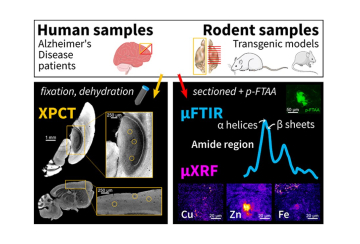
The aggregation of proteins in certain parts of the brain (amyloid plaques) and the action of reactive oxygen species (oxidative stress) on brain cells are two of the mechanisms that are thought to be involved in epilepsy...
|
Du synchrotron à l’hôpital
Une patiente de l‘hôpital Necker atteinte d’une maladie héréditaire vient de bénéficier d’un diagnostic précoce qui devrait lui éviter de perdre ses reins. Une nouvelle prouesse de la ligne SMIS, la ligne de microscopie infrarouge du synchrotron SOLEIL.
|
Infrarouge and chemotherapy
IR spectroscopy reveals effect of low doses of anti-tumour drug on cancer cells.
|
SOLEIL sheds light on the secret of the Stradivarius varnish
Works on Stradivari varnishes have just been published in the scientific journal Angewandte Chemie. They take place in the context of the setting-up of the European platform for ancient materials research IPANEMA (Loïc Bertrand, Laurianne Robinet) at SOLEIL. The infrared microscopy experiments were performed at the SMIS synchrotron beamline (Paul Dumas, Christophe Sandt). Discover the varnish composition of the most well-known instrument-maker.
--> See the interview of Loïc Bertrand, head of IPANEMA
|
|
A new approach to the early diagnosis of liver diseases
In a multidisciplinary study jointly conducted by three French research groups, analyses were carried out on hepatic steatosis. These studies have provided evidence of the localized heterogeneity of the pathological tissue and shown that variations in its composition can be detected at very early stages by spectroscopic approach, in particular using infrared, with facilities such as at synchrotron SOLEIL.
>> Publication in the journal PLoS ONE
>> SMIS beamline
|
Developments in High Pressure FTIR spectroscopy for use at the Australian Synchrotron
Funding for an International Science Linkage, under the French Australian Science and Technology Programme (FAST) has enabled collaboration between the Australian Synchrotron and the Synchrotron SOLEIL to share their expertise in the study of live biological samples and in the study of materials at high pressure.
|
Temperature and High-pressure dependency of Infrared modes of Zn(CN)2, a negative thermal expansion material - SMIS
Negative thermal expansion (NTE) materials, such as ZrW2O8 and other related ompounds are of intense current interest and many experimental and theoretical investigations have been reported and they emphasize the role played by the low energy phonons to explain this unusual behavior.
|
Salt, meat and infrared
How can we reduce the amount of salt in products that require significant quantities of salt in their manufacture? Thierry Astruc, from the Animal Product Quality Unit (INRA, Clermont Ferrand) came to SOLEIL to look for answers to this question.
|
|
Infrared microspectroscopy used in the search for spectral markers of liver disease - SMIS Beamline Diseases of the liver (steatosis, hepatitis, cirrhosis and cancer) are a major cause of death, both in Western society and in other parts of the world...
|
Video : Comet dust
By studying grains of comet dust, scientists hope to increase their understanding of the Solar System.
|
|
First users on the SMIS IR beamline: biology and biomedical on the agenda
The SMIS beamline (SMIS stands for Spectroscopy and Microscopy in the Infrared region using Synchrotron) has been open to experts colleagues since December 1st, 2007, and to general users since January 23rd, 2008. They all enjoyed the very high stability of the beam for their experiments. Convenience combined with high flux and spectral quality.
|
First beam for an infrared beamline
Monday, September 3rd 2007, the first photons reached the optical hutch of SMIS beamline, dedicated to infrared microscopy. The beam is produced by a dipole which vacuum chamber contains two mirrors: they allow the collection of a high photon flux, that will be simultaneously used on the two microscopes of SMIS.
|
 |