
PROXIMA-1
Etudes structurales des macromolécules biologiques par cristallographie
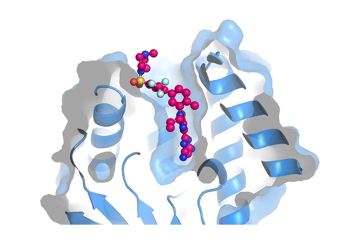
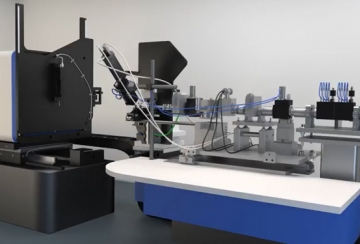
PROXIMA-1 participe à la biologie structurale intégrative installée à SOLEIL au sein de la section scientifique de biologie et santé, HelioBiology. Opérationnelle depuis Mars 2008, PROXIMA-1 est spécialisée dans les mesures de données bio-cristallographiques sur des macromolécules, au même titre que PROXIMA-2A. Elle offre un faisceau de lumière adapté et optimisé pour des études de diffractions aux rayons x de cristaux de molécules biologiques de grande taille, à hautes résolutions spectrales et pour des échantillons particulièrement sensibles aux dommages de radiations. La ligne est équipée d'un détecteur de rayons x à lecture rapide et de grande surface; en combinaison avec un robot permettant des échanges automatisés des échantillons, cette configuration permet d'étudier un très grand nombre de cristaux dans un temps réduit. Des stratégies avancées de collectes de données sont disponibles de façon systématique en prenant avantage d'un goniomètre à géométrie 3-cercles de dernière génération.
L'équipe


Communications Twitter
Données techniques
entre 6,5 et 15 keV
2E-4 (Si 111)
onduleur sous vide de type U20
- transfocateur à lentilles de Beryllium
- monochromateur de type en channel cut
- miroirs bimorphes Kirkpatrick-Baez (K-B)
- goniomètre 3-cercles à géométrie Chi (SdC de 1 µm sur Chi)
- échangeur d'échantillons robotisé de type Staubli
- cryo-stat de type Oxford Cryosystems
- détecteur de fluorescence à forte sensibilité (Ketek)
principalement 40 x 20 µm2
environ 2.0 E+12 phot/s/0.02%bw pour un courant dans l'anneau de 500 mA
EIGER-X 16M (Dectris Ltd.)
linéaire
Thématiques scientifiques
| CRISTALLOGRAPHIE MACROMOLÉCULAIRE À HAUTE RÉSOLUTION |
Mesures de diffraction haute résolution (<0.8 Å). |
|---|---|
|
CRISTALLOGRAPHIE MACROMOLÉCULAIRE SUR DES GRANDES MAILLES |
Mesures de diffraction à partir de cristaux ayant des mailles cristallines de grandes dimensions (grands complexes, virus). |
|
PHASAGE EXPÉRIMENTAL PAR M/SAD |
|
|
Recherche appliquée |
|
En recherche interne à SOLEIL, la ligne de lumière PROXIMA-1 est rattachée à la section scientifique :
| Section scientifique SOLEIL | Biologie, santé, Héliobio |
|---|
Citer la ligne
PROXIMA-1
Pour toute utilisation de la ligne, merci de citer la publication suivante :
Coati, A., Chavas, L.M.G., Fontaine, P. et al. Status of the crystallography beamlines at synchrotron SOLEIL . Eur. Phys. J. Plus 132, 174 (2017). https://doi.org/10.1140/epjp/i2017-11403-3
MXCuBE
Pour référence à l'utilisation de MXCuBE, merci de citer la publication suivante :
Oscarsson, M., Beteva, A., Flot, D. et al. MXCuBE2: the dawn of MXCuBE Collaboration . J. Synchrotron Rad. 26, 393-405 (2019). https://doi.org/10.1107/S1600577519001267
Onduleur
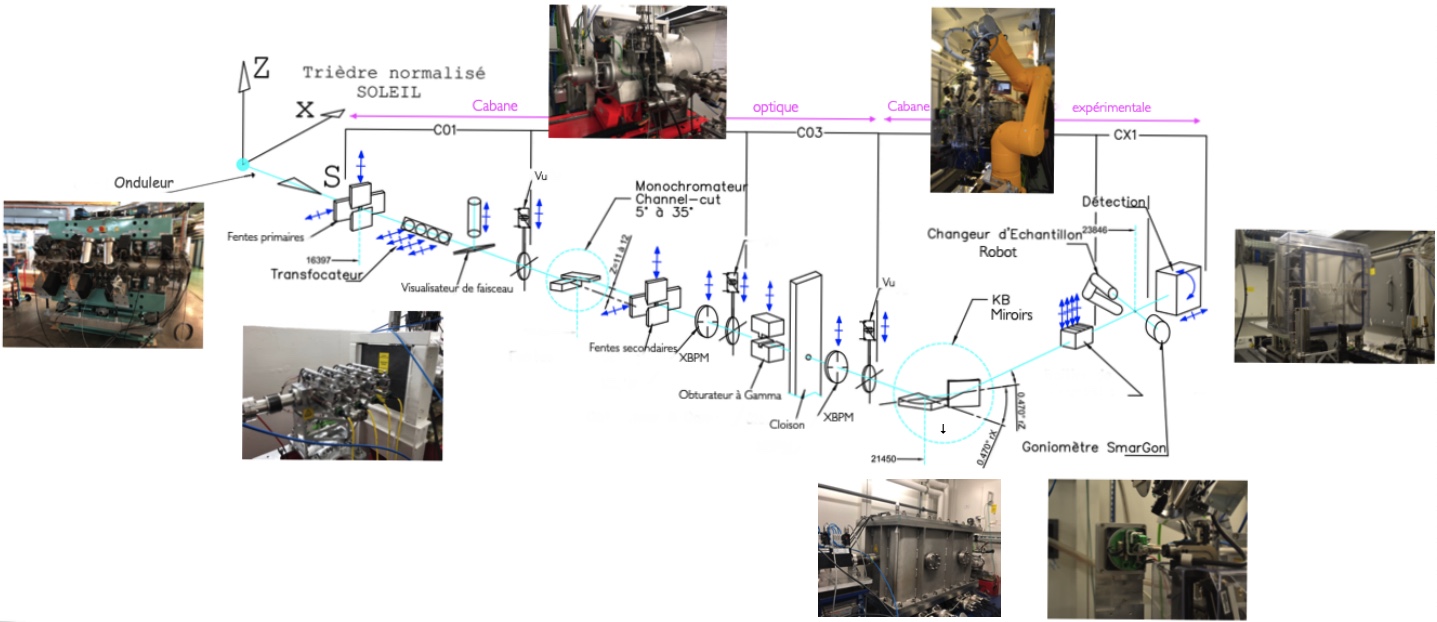
La source de la ligne de lumière est un onduleur U20, contenant 100 périodes de 20 mm. 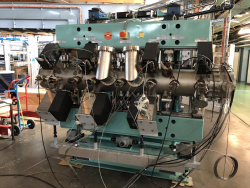
Cet onduleur a été choisi pour obtenir les énergies les plus élevées possibles, sans perte de brillance.
Transfocateur
Un transfocateur peut être défini comme un équipement optique consistant à positionner des lentilles sur le passage d’un faisceau pour en modifier les propriétés géométriques. Dans notre cas, pour palier à l’aberration chromatique du Béryllium, cet équipement doit disposer de motorisations permettant d’insérer ou d’extraire les lentilles et d’une enceinte étanche permettant sa mise sous vide. Les lentilles sont positionnées dans des stacks en cuivre qui diffèrent par le nombre de lentilles qu’ils possèdent. Ainsi le premier stack (au plus proche de la source) possède 4 lentilles et correspond à la configuration de focalisation pour 6 keV. Le stack numéro 2 possède 5 lentilles et permet de couvrir une énergie de 7 keV. Le stack numéro 3 dispose de 6 lentilles pour une énergie de 8 keV. Enfin, le stack numéro 4 contient 7 lentilles pour une énergie de 9 keV. Ensuite, il suffit de faire différentes combinaisons de stacks pour couvrir les plus hautes énergies jusqu’à insérer tous les stacks pour 15 keV.
Monochromateur
Un monochromateur est un dispositif utilisé en optique pour sélectionner une gamme de longueurs d'onde la plus étroite possible à partir d'un faisceau lumineux de gamme de longueurs d'onde plus large.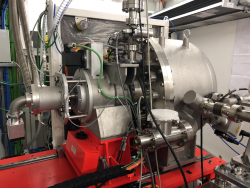
La ligne de lumière PX1 est munie d’un monochromateur de type channel cut, lui-même constitué d’un cristal de silicium Si(111) pour une sélection en gamme d’énergie allant de 6 keV à 15 keV, avec un temps de changement d’énergie très rapide.
Miroirs bimorphes K/B
Une paire de miroirs Kirkpatrick-Baez, ou miroirs K/B, concentre les faisceaux de rayons x en les réfléchissant en incidence rasante sur une surface courbe, généralement recouverte d'une couche de métal lourd. 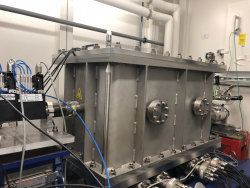
Les miroirs K/B peuvent focaliser les faisceaux sur de petites tailles avec une perte d’intensité minimale. Ils sont généralement utilisés par paires - une pour faire la mise au point horizontalement et une pour la mise au point verticale. Lorsque les focales horizontale et verticale coïncident, le faisceau de rayons x est focalisé sur un point, généralement l’échantillon à analyser.
Goniomètre
Le goniomètre a été créé par l’entreprise SmarAct. C’est l’appareil qui permet le centrage de l’échantillon sur le faisceau de rayons x. Sur PROXIMA-1, le goniomètre est composé de 3 axes principaux. 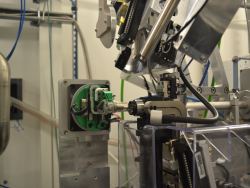
L’axe Omega est l’axe de rotation principal. Pour permettre des collectes de données, il est capable d’effectuer des rotations sur 360°. La sphère de confusion (SdC) de Omega est typiquement en dessous du micron.
Le second axe de rotation est l’axe Chi, qui a une flexibilité rotatoire limitée, de 0º à 50º. La SdC pour le Chi a été mesurée à 2 microns ou moins.
L’axe Phi est le troisième axe rotatoire, situé à l’extrémité de l’axe Chi. Tout comme Omega, cet axe Phi est également capable de rotations sur 360º. La SdC pour le Phi est également de l’ordre de 2-3 microns.
Passeur d’échantillons
Robot passeur d'échantillons de type Staubli, avec une option de criblage de puces microfluidiques. 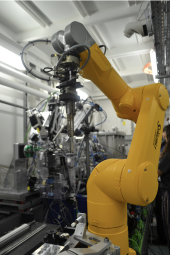
Le robot récupère des échantillons disposés dans des cassettes de stockage d’échantillons de design UniPUCK, contenant 16 cristaux par palet. Le Dewar de stockage de cassettes peut contenir 3 UniPUCKs, soit un total de 48 échantillons.
Détecteur
La ligne PROXIMA-1 est équipée d’un détecteur Eiger-X 16M (Dectris Ltd.), optimisé pour des collectes de données à une fréquence de 100 Hz. 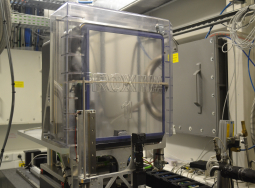
Typiquement dans une collecte de données, le détecteur va fournir un fichier master contenant des paramètres expérimentaux (nom_des_images_master.h5) et des fichiers pour les données expérimentales contenant les clichés de diffraction (nom_des_images_data_#####.h5).
A savoir avant la manip
Récupération du login et mot de passe dans le SunSET
Connexion à PROXIMA-1 via NoMachine
Equipements disponibles sur la ligne
- Détecteur Ketek SDD pour mesurer les seuils d'absorption ;
- Oxford Cryosystemes Cryostream Série 700 pour le refroidissement des échantillons à 100 K ;
- Dewars pour la manipulation et transfert d'échantillons ;
- Outils cryogéniques pour la manipulation des cristaux ;
- Detecteur EigerX 16M avec une cadence standard de 100 Hz ;
- Robot passeur d'échantillons CATS, avec option de criblage de puces microfluidiques.
/!\ Longueur des boucles
Les boucles utilisables sur la ligne sont du standard SPINE. Pour plus d'information vous pouvez visiter le site https://instrumentation.embl.fr/spinesampleholder/pdf/DM_16100_-_Sample_holder.pdf .
La combinaison du robot passeur d’échantillons et du goniomètre étant très sensible, il n’y a pas trop de flexibilité pour le type d’échantillon manipulable sur la ligne. Nous pouvons accepter des boucles de longueur comprise entre +- 2 mm vis-à-vis du standard spécifié SPINE.
Sauvegarde et récupération des données (GLOBUS)
La sauvegarde des données sur les lignes de Synchrotron SOLEIL se font classiquement ‘the old way’, physiquement sur des disques durs fournis par l’utilisateur. Le transfert par sftp ou autre système comparable n'est pas supporté sur la ligne, ni pour importation, ni pour exportation des données.
La récupération des données en ligne est possible en utilisant la solution GLOBUS : https://www.globus.org. Vous trouverez les instructions de connexion et de récupération des données ici : Document Globus
La sauvegarde est faite par l’intermédiaire des disques USB externes qui pourront être montés sur les stations LINUX de la ligne. La ligne dispose également de disques de prêts qui pourront être empruntés par les utilisateurs en demande, pour de courtes périodes de dépannage. Un logiciel de sauvegarde automatique est disponible sur la ligne.
Pour les utilisateurs du passeur d’échantillons
De manière à se familiariser avec les techniques utilisées sur la ligne, une série de vidéos est disponible, mettant en évidence :
- Comment préparer l’azote liquide : vidéo
- Comment transférer ses échantillons stockés en viales vers des Unipucks : vidéo
- Comment mettre en places les Unipucks dans le Dewar du robot : vidéo
- Comment récupérer des échantillons des Unipucks vers des vials : vidéo
Contacts locaux et heures de démarrage des expériences
Classiquement à SOLEIL, les expériences sont allouées pour 3 shifts de 8 heures, démarrant à 08:00 le matin et finissant à 08:00 le lendemain. De manière à permettre une meilleure flexibilité d’utilisation des lignes de lumière de cristallographie, les équipes MX ont opté pour une planification plus flexible.
Les responsables de projets sont généralement contactés quelques 5 semaines avant le début du Run. Ils ont alors la possibilité de choisir sur un calendrier partagé du temps d’accès à la ligne avec au choix 1 shift (08:00 - 16:00), 2 shifts (16:00 - 08:00), ou bien le plus classique 3 shifts. La décision de l’organisation des shifts est alors faite entre le responsable de projet, le responsable de la ligne, et le contact local assigné pour les expériences planifiées.
De manière à simplifier les expériences, et pour permettre une stabilité accrue de la ligne, les utilisateurs sont demandés d’accepter de devoir disposer de la ligne au maximum 30 minutes après le début officiel des expériences (par exemple: 08:30 au lieu de 08:00). Pendant ces 30 minutes, le contact local prendra le temps d’aligner le faisceau, de préparer pour le début des expériences, et d’expliquer aux utilisateurs l’organisation de la journée ainsi que les opérations et utilisations classiques sur la ligne.
Le contact local ne sera disponible que jusqu’à 17:30 pour toute introduction particulière au fonctionnement de la ligne. Après ces horaires, il est de la responsabilité des utilisateurs de partager les informations entre eux pour ne pas perdre de temps précieux sur leurs expériences. Entre 17:30 et 23:00, le contact local sera disponible au téléphone pour tout conseil ou dépannage à distance. En cas de problèmes entre 23:00 et 08:00, la procédure à suivre est de lire la documentation disponible sur la ligne et/ou contacter les coordinateurs de hall (téléphone 97 97, 24h/24h). Si le problème ne peut pas être résolu, les expériences devront être arrêtées. Le contact local ne doit être appelé pendant la nuit seulement dans le cas d’un risque sérieux d’endommagement d’un équipement de la ligne.
>> Espace Utilisateur de SOLEIL<<
Manipulation des Dewars
Les Dewars doivent être envoyés par les soins de l’utilisateur à l’adresse suivante :
Synchrotron SOLEIL - PROXIMA-1
L'Orme des Merisiers
Départementale 128
91190 Saint AUBIN France
Il est fortement recommandé de contacter le contact local assigné de l’envoi des Dewars. Les Dewars seront remplis à leur arrivée sur site. Le retour des Dewars doit être pré-payé par l’utilisateur.
Accès et équipements des BIOLABs
Dépannage
Une liste de FAQ est disponible sur la ligne, avec les méthodes de contournement des problèmes les plus souvent rencontrés. Si toutefois vous avez rencontré des problèmes non reportés ou introduits par le contact local, merci de le signaler au responsable de la ligne pour qu’une investigation soit démarrée et une solution trouvée.
Manuel utilisateur
Contrôle de la ligne par MXCuBE
Le logiciel MXCuBE permet aux utilisateurs d'interagir avec les composants matériels de la ligne de lumière et fournit des méthodes automatisées pour effectuer des expériences MX sur la ligne. Le manuel du programme peut être téléchargé sur le  lien suivant. La vidéo montre comment prendre en main MXCuBE, monter un cristal sur e goniomètre à l'aide du robot, cntrer un cristal, charactériser puis collecter ce cristal. Elle montre également comment faire un X-ray centring si le cristal n'est pas bien visible dans le boucle ainsi que comment faire une collecte helicoidale.
Réalisation d'un energy scan dans MXCuBE
Visualisation des données via ADXV
To show resolution rings, in Adxv Control window, click on Edit, Properties, Resolution Rings : ON
Visualisation des données via ALBULA
Lancer albula_3.2
Dans EIGER monitor, check if IP address is 195.221.8.71 port 80 Pause 2
Analyse des données
Les scripts xdsme, écrits et maintenus par Pierre Legrand, intégreront les données de manière semi-automatique. Vous pouvez trouver des téléchargements et des instructions d’utilisation sur ce lien.
Manuels téléchargeables
Les fichiers suivants sont téléchargeables, pour une lecture off-line afin de mieux appréhender les expériences sur la ligne.
- remote access manual (704.05 Ko): pour mieux comprendre les procédures de connection à distance sur la ligne PROXIMA-1. Le manuel est à suivre à la lettre pour permettre une connection fluide et sans peine.
- proxima1 user manual (1.5 Mo) : notes rapides des fonctions les plus utilisées de MXCuBE, ainsi que quelques astuces à mettre en oeuvre pour palier aux problèmes les plus fréquents sur la ligne.
Liens utiles
Voici une liste non-exhaustive de liens utiles pour les applications de cristallographie des macromolécules biologiques. Les citations en italic sont directement extraites des articles références de chaque lien.
- the Cambridge Crystallographic Data Centre (CCDC). "The CCDC provides a web service for researchers to access any individual structures [of small molecules], enabling them to view and download the enhanced data sets deposited with the CCDC."
- CheckMyMetal. "is an easy-to-use metal-binding site validation server for macromolecules that is freely available".
Projets de la ligne
AcceS-Ge CoViD-19 - Génomique structurale accélérée sur les protéines codées par le pathogène responsable du CoViD-19 en utilisant notre pipeline de cristallographie in vivo.
Collaborations internes
HelioBio
Cette section scientifique a été créée en 2006 avec l'ensemble des scientifiques impliqués dans les sciences biologiques à SOLEIL. Fortement interdisciplinaire, à la jonction entre les axes scientifiques et les techniques expérimentales, le groupe HelioBio se concentre sur le développement de méthodes innovantes pour favoriser les recherches les plus en pointe des utilisateurs de SOLEIL. C'est d'une importance cruciale dans le domaine très concurrentiel et en fort développement des sciences du vivant : en permettant l'étude de la plus large palette d'échantillons, ces améliorations méthodologiques peuvent faire la différence entre le succès et l'échec, la capacité à publier le premier ou... le second. Plusieurs publications très importantes ont bénéficié de cette dynamique et de cette symbiose entre les scientifiques et les utilisateurs des lignes de lumière SOLEIL.
Collaborations externes
à remplir…